Showing posts with label Wales. Show all posts

Thursday, December 11, 2014

ESHT 2014 - Back to the coach and out of Llangollen and Wales, towards our next destination, Chester, England

-->

1_DSC_0093_2

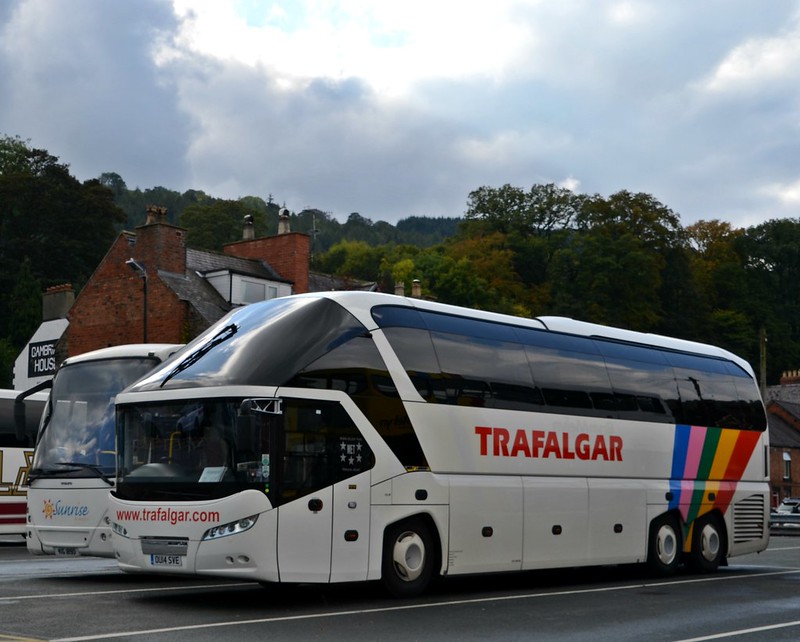
Our Trafalgar coach, right where Tommy parked it in Llangollen. A few minutes after I took this photo, all 52 of us travelers, plus Tommy and Anna, tour director, were underway.

DSC_0097_2

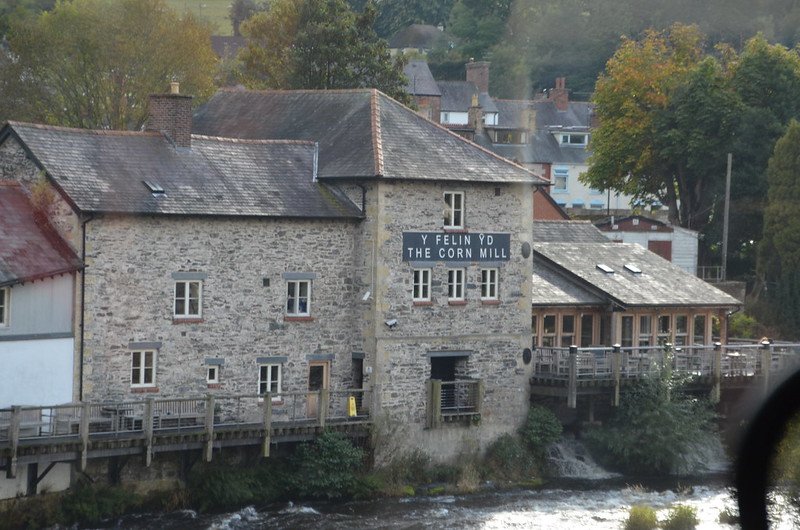
One last photo taken through the coach window of The Corn Mill, across the River Dee. It's a traditional pub restaurant.

3_DSC_113_2

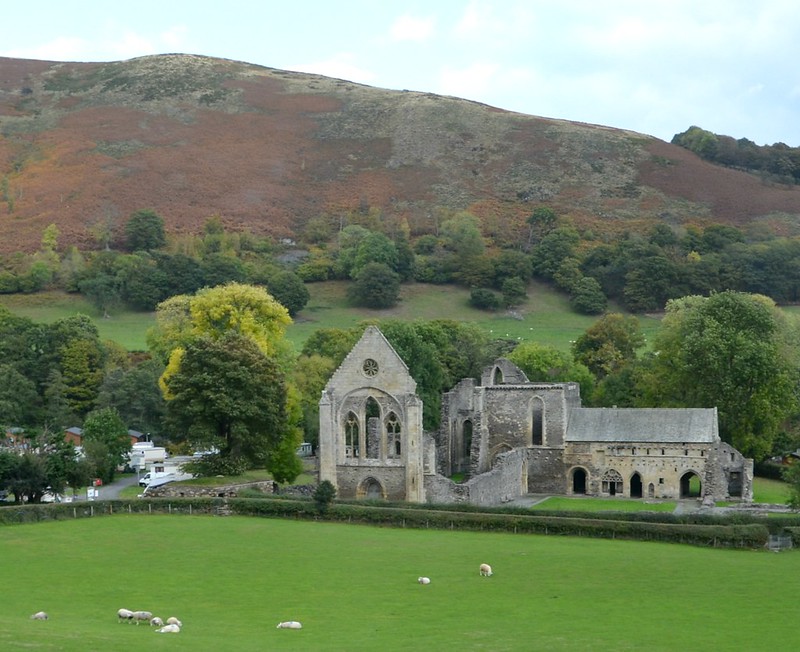
As we rode along the A542, thankfully I took enough photos of this ruin through the coach window so that I managed to get a relatively clear one which I could straighten and share with you. Not that I could remember exactly what it was. However, using my search term skills honed by being a high school librarian back in Mississippi, I Googled ruined abbey between llangollen and wrexham--got it on the first hit! Yea, I've still got the touch.

Valle Crucis Abbey (found at the Llangollen in Denbighshire North Wales' Web site:

The evocative ruins of Valle Crucis lie in green fields beneath Llangollen's steep sided mountains. In medieval times, this was a remote spot (ideal for austere Cistercian monks, who deliberately sought out wild and lonely places).

Their Abbey, founded in the 13th century and added to a century later, has fared better than many of its contemporaries against the ravages of time, history and neglect.

Many original features remain, including the glorious west front complete with an elaborate, richly carved doorway, beautiful rose window and 14th century inscription 'Abbot Adams carried out this work; may he rest in peace. Amen.'

Other well preserved features include the east end of the Abbey (which overlooks the monks' original fishpond) and lovely Chapter House with its striking rib-vaulted roof. But Valle Crucis is not just a lesson in medieval ecclesiastical architecture.

A visit to this fascinating site evokes the lives of the Cistercian monks - successful sheep farmers and enthusiastic supporters of Welsh culture as well as devout men of religion .

Interestingly, Valle Crucis also reveals a gradual relaxation in the strict regime of the Cistercians. By the late 15th century, the abbot decided to build for himself a fine new hall with a heated private apartment.

Valle Crucis, the 'Valley of the Cross', is named after Eliseg's Pillar, a 9th century Christian memorial cross which stands nearby.

1998 marked the 900th anniversary of the founding of the Cistercian Order at Citeaux in Burgundy. The white-robed Cistercians were the most successful of all the medieval religious orders. They arrived in Britain in 1128, searching out remote places in which to practice their austere religion. At Valle Crucis and elsewhere, they left a glorious architectural legacy which serves as a remarkable insight into their way of life.

Access: B5103 from the A5, west of Llangollen, or A542 from Ruthin.

Remember that A542 and Ruthin, for later on, OK?

Monday, December 8, 2014

ESHT 2014 - Sights around Llangollen, No. 2


I putting what I quote from the Web in italics.
DSC_0005

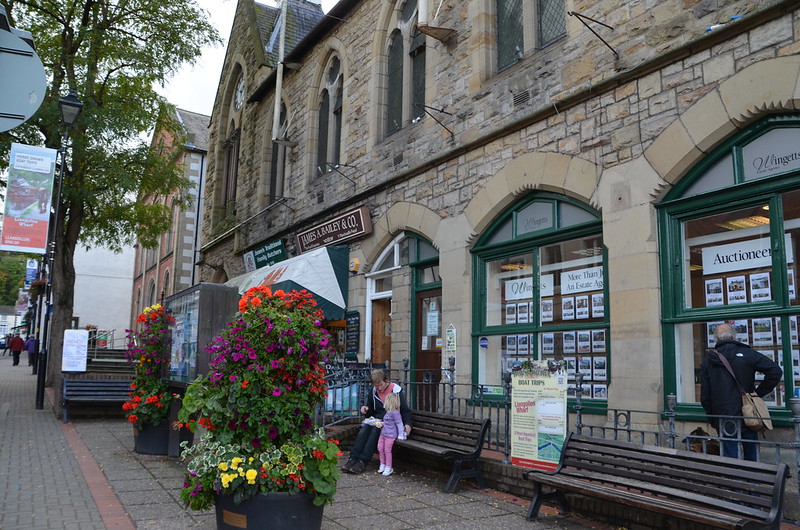
Llangollen is a small town and community in Denbighshire, north-east Wales, situated on the River Dee and on the edge of the Berwyn mountains. It has a population of 3,412. It's difficult for me to pass by flowers and not take a photo. I noticed these outside James A. Bailey & Co. on Castle Street. I lucked out here, capturing as well a cute  little girl with her dad, I'll bet. I wonder if they got the food he has in his lap at Bailey's. I read this online about The Food Emporium: If you're planning a picnic or lunch on the run, drop in here for filled baguettes and paninis, gourmet sausage rolls, homemade pies (try a Welsh Oggie – a meat, potato and onion pasty), Welsh ales and ice cream. I wonder about that building--it looks like a church to me.

DSC_0013_2

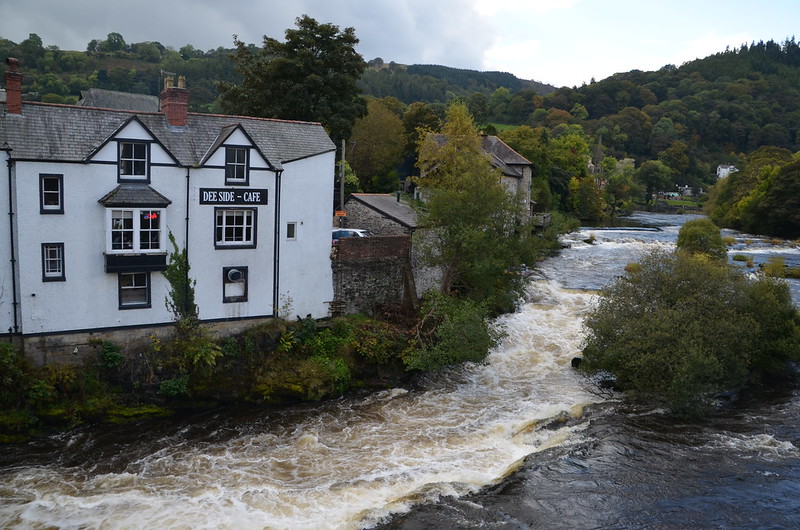
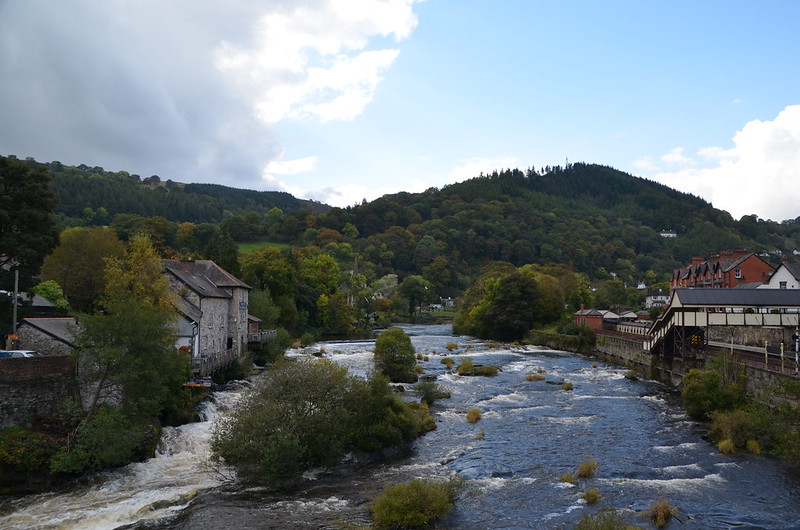
Llangollen takes its name from the Welsh llan meaning "a religious settlement" and Saint Collen, a 6th-century monk who founded a church beside the river. St Collen is said to have arrived in Llangollen by coracle. As there are no other churches in Wales dedicated to St Collen, it is possible that he may have had connections in Colan in Cornwall, and Langolen in Brittany. I read this online about the Dee-Side: The Dee Side Bistro is located on the banks of the River Dee in the beautiful Welsh retreat of Llangollen. You can sit and enjoy our exquisite food or drinks with picturesque views, of the the River Dee and surrounding stunning scenery. Hmmm. I wonder if you can hear the river from inside the cafe. I took this photo from the bridge over the River Dee.

DSC_0017_2

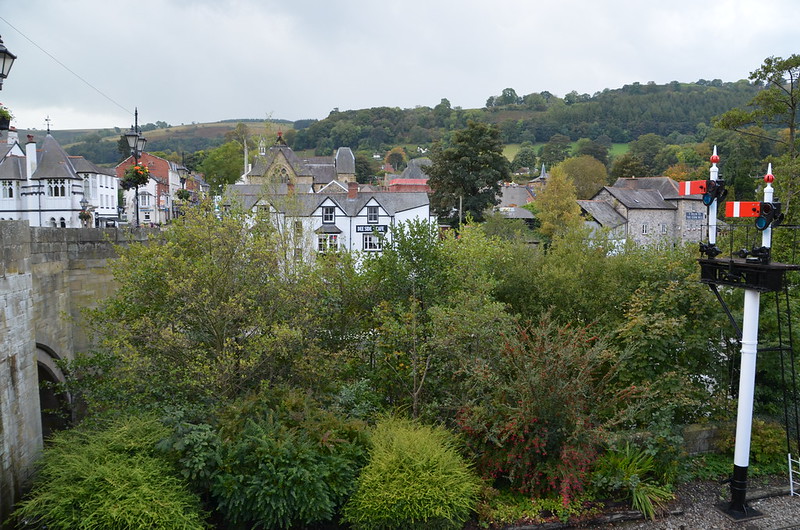
Inside this a great wide shot! Llangollen Bridge: There are references to a bridge at Llangollen as far back as 1284 but the first stone bridge was built by John Trevor, the Bishop of St Asaph in 1345.

Rebuilding took place in 1656, and a stone with this date and the name of the stone mason, Rondle Reade, was found during a later bridge widening. The downstream side of the bridge is unaltered since the 15th century but the bridge has been widened twice on the upstream side.

In 1871 a census recorded 6585 people, 298 horses, 129 waggons, 92 carts and 79 cattle using this 8 foot wide bridge – sufficient evidence of chaos to justify the 1873 widening! In 1863 the symmetry of the arches had been spoilt by the addition of the railway arch and, during this work, pieces of tombstones with Latin inscriptions were found, thought to have come from Valle Crucis Abbey. The widening in 1968 was due to traffic congestion.

Llangollen’s bridge is regarded as one of the ‘Seven Wonders of Wales’: “Pistyll Rhyadr and Wrexham Steeple, Snowdon’s Mountain without its people, Overton yew trees, St Winefride’s Wells, Llangollen Bridge and Gresford bells.”

My main goal after eating lunch was to walk all the way across the bridge and then get back to the coach on time. Oh, and to allow enough time to stop by the Buttered Crust for one last visit to the facilities--we'd gotten approval for that from the folks who worked when we paid our lunch tab. Later on I discovered that the gray buildings on the riverbank beyond those trees were the village's mill. More about that later in today's post. Gosh, I wish we'd had hours to spend in Llangollen!

DSC_0028_2

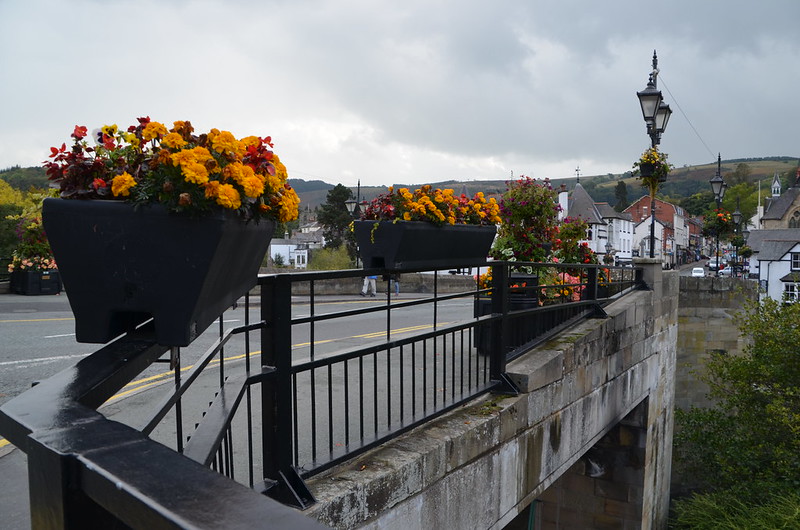
Today Llangollen relies heavily on the tourist industry, but still gains substantial income from farming. Most of the farms in the hills around the town were sheep farms, and weaving was an important cottage industry in the area for centuries. Several factories were later built along the banks of the River Dee, where both wool and cotton were processed. I made it to the other side of the bridge and turned back to take this photo. Love these flowers all along the bridge.

DSC_0030_2

You can see the Dee Side Cafe through the tops of the trees that line the river bank. In between me and the trees are the railroad tracks. Notice the gray stone buildings to the right of the photo? There's a rectangular sign on the rightmost one. It says The Corn Mill. I looked it up online--it's another restaurant.

From The Corn Mill's Web site: The Corn Mill has been grinding flour for at least seven hundred years, and owes its foundation to the Cistercian monks of Valle Crucis. It is first mentioned in a 13th Century document dealing with a fishing dispute between the freemen of Llangollen and the Abbot.

The building as it now stands was re-built in 1786 with three pairs of grinding stones, and continued as a working mill up until 1974. By the time Jerry and Graham came across it, however, it was sadly derelict and in danger of falling into the river. It is owned by a friend of Jerry’s called Phil Brown, and we ended up leasing the mill from him for fifty years. We used a very talented chap called Owain Evans as architect, and appointed Read and Co., a decent local builder with a good reputation. Planning permission took years, because of course it’s an important old building.

The planning authorities, based in Ruthin, thought the conversion to a pub/restaurant was a great idea and wanted it to go ahead. The conservation officer really wanted the building restored to a mill. The local council didn’t want the thing at all, and in addition we had to deal with the Historic Mills people, the River Authority and CADW, (the Welsh building conservation body), each of whom had a different agenda, so at times it was like herding cats.

When we finally re-opened the building in June 2000, lots of people came to see what we had done with it, as there is genuine affection for the Mill locally. There was a lot of excitement when we finally got the water wheel turning again for the first time in twenty-five years.

One visitor, who has since become a regular, had been born in a bedroom upstairs, and found on our walls a framed photograph from the 1950’s of her father with his dog in a coracle on the Mill race. We still have the actual coracle, which we’ve mounted on the wall at the top of the stairs. She insisted that in the ceiling of the ground floor there had been a huge ship’s beam with a 17th century date carved into it, but we’ve never found it.

The place has gone like a train from the very beginning. Mind you, if we’d known how much it was going to cost from the outset, the truth is we probably would never have started.

DSC_0031_2

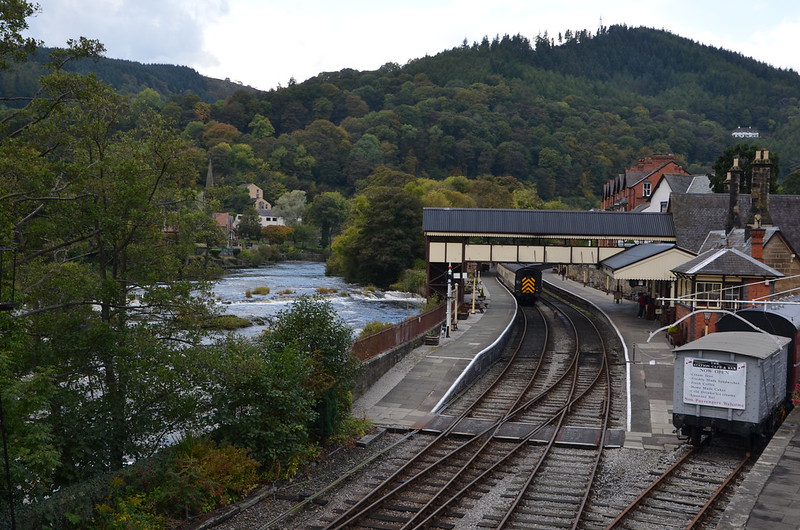
The railroad tracks and the train station. The railway was extended from Ruabon, via Acrefair and Trevor, to reach Llangollen by 1865, operating passenger and goods services. Thie Ruabon to Barmouth Line became part of the Great Western Railway. One hundred years later the line closed under the Beeching Axe of 1964, closing to passengers in early 1965, and to freight in April 1969. The line was lifted in May 1969. However, a 10-mile stretch of the line has been restored between Llangollen and Corwen and operates as the Llangollen Railway, a tourist attraction. In 2002, the Rainhill locomotive trials were re-staged on the line. I also read this online: 1n 1953 The Queen and Prince Philip arrived in Llangollen by train as part of a tour of Wales. There are still people in Llangollen who remember travelling from Llangollen to London without changing! The line and station closed in 1965 and for years it was left in a terrible state, falling to ruins and full of weeds. The station and the line as far as Carrog, to the west were re-opened by volunteers in the 1970s and continues to operate as a major tourist attraction. 

DSC_0034_2

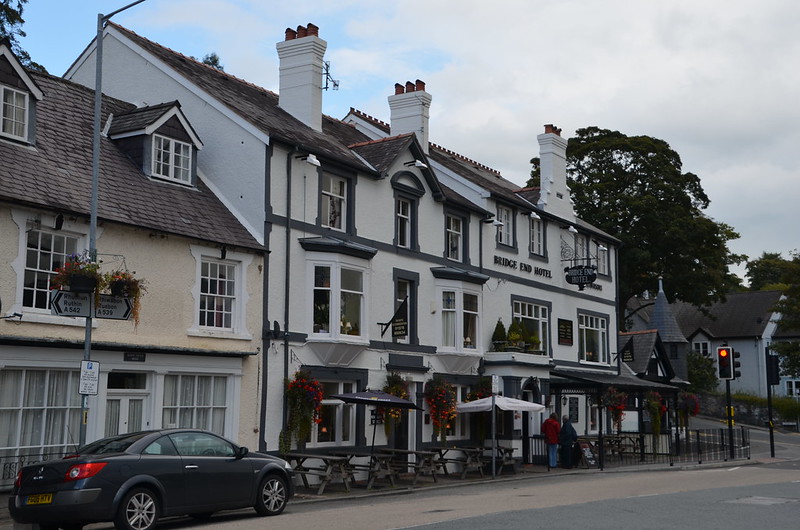
Looking at my watch, I realized I needed to start back, so I walked along the street to the end of the bridge. Then I decided to take a photo of this appropriately named hotel. I found this on the Llangollen Museum's Web site: The early history of the Bridge End Hotel is difficult to determine exactly. Early 18th century paintings of Llangollen appear to show no buildings at the northern end of the bridge. A map from 1791 does show a building but this may be the Bishop Trefor next door.

The Bridge End Hotel first appears in records in the 1840s, both in Pigot’s business directory and on the tithe map. At this time the inn was owned by John Jones of Rhysgog and run by Robert Wright. He was succeeded by Richard and Mary Parry who were in turn followed by Eliza Whittaker in the 1880s, paying an annual rent of £37 to Martha Baker. At this time both sides of the inn were two storey buildings, with the upstairs on the right hand side reached by an external stairway.

At the end of the 19th century, however, the left hand part of the inn was raised to three stories and a new chimney installed in front wall of the right hand side. In 1927 the right hand half of the inn was also raised, the chimney first being taken down and rebuilt onto the new taller building. Eliza Whittaker was followed by Piercy J. Pace and A.W. Crowhill before S.R. Johnson moved from the Royal Hotel to manage the inn in the 1930s.

Sunday, December 7, 2014

ESHT 2014 - Several signs in Llangollen that caught my eye, plus some family news


IMG_3638

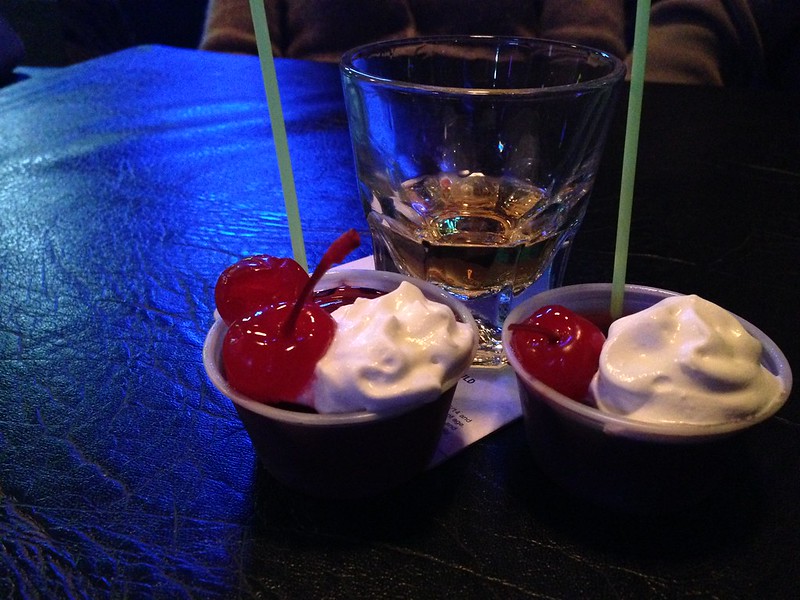
I missed posting yesterday, Saturday, December 6. You see, I most often work on my daily post the night before, setting it up to post the next morning at 3:30 a.m. I failed to do that Friday night, mainly due to several swigs of Jamesons and two vodka-infused Jell-o shots which I thoroughly enjoyed with my two sons, Lamont and Leland, and Leland's girlfriend Rachel. We met at the Blue Diamond after I got off work Friday to celebrate my younger son Leland's new job which he starts on Monday, December 8. Finally, after years of trying, he has the chance to put to use his civil engineering technology associate's degree with Ascentec Engineering, a company that--I read on the Internet--engages in the design, development, and manufacture of fixtures and tools for the electronics assembly industry. He'll be driving to Tualatin, a nearby suburb. Leland begins as a design intern. We all believe that the sky's the limit!

Back to the lack of a Saturday post, on Saturday I spent three hours getting to and back from a fine lecture at the Architectural Heritage Center: Portland 101: Crooked Grids, Tiny Blocks, and the Building of the City . . . How did Portland get this way, with its little square blocks and weird intersections, the funny pronunciations and the bridge ramps to nowhere? Why is it even located where it is? There’s a reason for everything (we didn’t say a good reason…)!
Stone carver’s mistakes, upside-down pineapples, and mythical tunnels are just part of the things true Portland residents should know about – we’ll look at the grid, the naming and re-naming of our streets, and the eras of commercial architecture that have marked our compact and vibrant downtown, as well as the near blitzkrieg effect of the Great Demolition which left us with parking lots where the temples of finance and industry once stood. Long time AHC Education Committee member Robert Jordan will guide us through 150 years of Portland’s development – a great overview for those just getting interested in Portland’s architectural heritage as well as for anyone who ever wondered, “Why did they do THAT?” 

Afterward, Leland and his sweetheart Rachel picked me up and we went to nearby Lloyd Center, a shopping mall with a food court, for lunch and a successful adventure in shopping for business casual pants. Yes, successful in that we found three pair which are now in Leland's possession as early Christmas presents from me--sweet! Successful in that we survived the uncomfortable heat inside the stores at the mall.

By the time I got home, I had just enough energy left to gather my canned good contributions for the Oregon Food Bank barrel at the Blue Diamond and to walk over there. After placing them in the barrel, I sat down at the bar and drank several glasses of water and enjoyed talking with Janessa, bartender, and Trace, cook--two of my favorite young people to whom I did not give birth! Then, I ate half an order of chicken black bean nachos, drank a hot toddy with half a shot of Fireball in it, thanks to a kind young man who overheard me talking about only needing a half shot--he's new to the Blue Diamond and had no idea just how big the shot glasses are there! After deciding to buy a shot, he shared half with his lady friend and half with me for my hot toddy! So, when I got home, I got on my comfy clothes and headed for the recliner and the heating pads. No contest, I fell asleep with the best intentions of getting up in a few minutes and blogging! Now, it's Sunday morning and I'm blogging for today, hopefully for tomorrow and maybe even a few days in the future!

1_DSC_10001_2.jpg

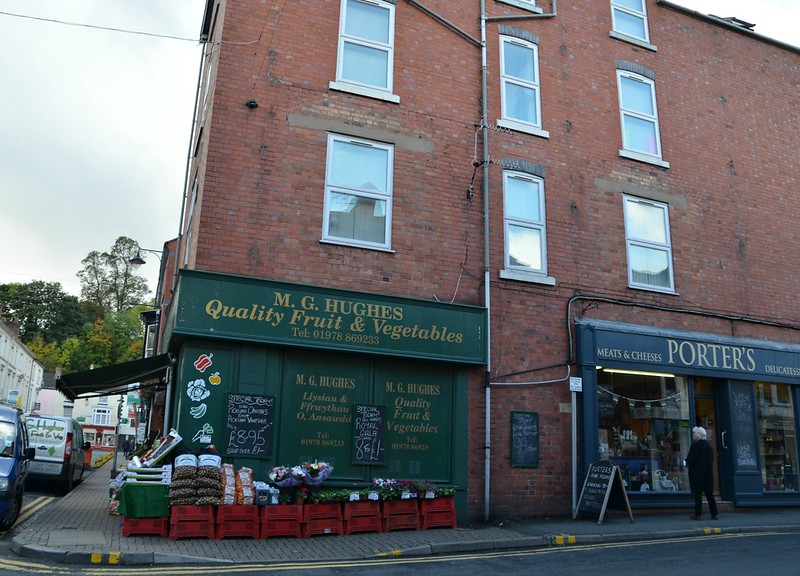
Hughes! I like that and the fact that the word's on a nice-looking corner store selling quality fruit and vegetables right next door to another store selling meats and cheeses, also a deli. Serendipity! I put this photo on Facebook yesterday because my son Leland's first name is Hughes, plus he and his brother have had careers involving food since 1994--Lamont started at a busboy at Bravo! in Jackson, Mississippi, our former hometown, while Leland began there as a dishwasher; over time they both ended up at 3 Doors Down Cafe in Portland, Lamont as sous chef, Leland as line and prep cook, all skills learned on the job with the added touch of inherited talent from their dearly departed Daddy whose skills exceeded mine, masterfully.

And, since Leland's changing careers tomorrow, this photo should be shared today on the blog. Lamont will continue his work at Provvista Specialty Foods where he runs the company's lunch program (cooking lunch daily from fresh ingredients, scratch recipes, for 50 employees) and afternoons he maneuvers all sorts of cheese, including 80-pound wheels imported from Italy, into the sizes sold to restaurants and grocery stores around the Pacific Northwest. With his new job, Leland no longer has to get up at 3:15 a.m. Monday through Thursday to drive a truck full of ordered/sold goods to another driver in the Seattle area, then drive the empty truck back to Portland. Yea for Leland! Plus, Lamont's satisfied to have a job which makes good use of his skills and talents plus allows him to have weekends off. No more restaurant kitchens for either son.
2_DSC_0002_2.jpg

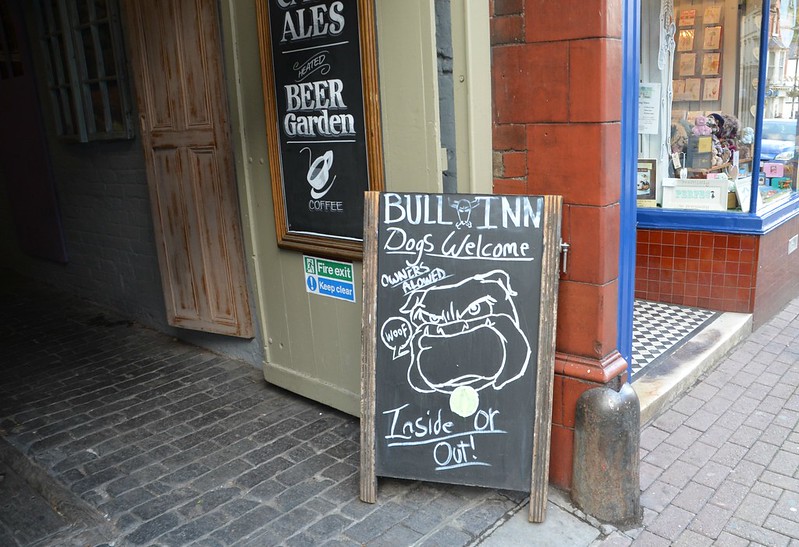
Around the corner, I came across this sign--I immediately noticed bulldog since I'm a loyal Dawgs myself, a Mississippi State University Bulldog, to be precise. Talk about serendipity! Plus, I enjoyed the humor in the sign--dogs welcome, owners allowed.
3_DSC_0003.jpg

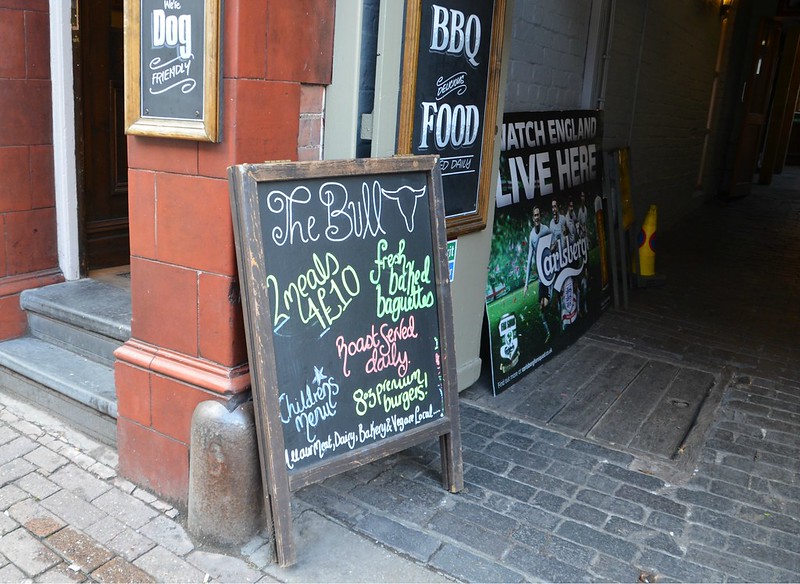
Then I turned to my left to check out the other sign at The Bull. Hmmm. I'll bet we'd have walked in to check it out if we weren't already completely satisfied with our lunch at the Buttered Crust. I particularly like that item, Roast Served Daily. However, in checking some online reviews, disappointment most likely would have ensued.

Monday, December 1, 2014

ESHT 2014 - We jump ahead a bit on October 9 in order to participate in the City Daily Photo Theme Day Post - Workers


Click here for the Monthly Theme Day Gallery at City Daily Photo.
DSC_0092_2

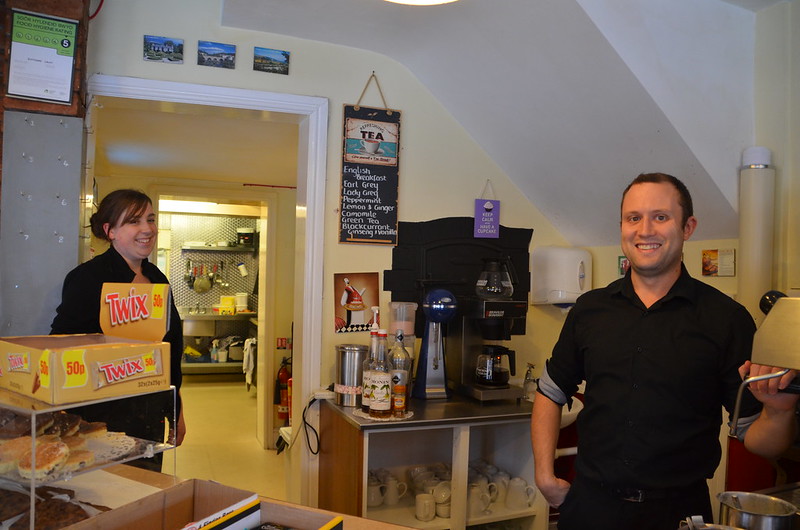
A delicious lunch, prepared and served by the excellent workers at the Buttered Crust in Llangollen, Wales. If my memory serves me, that Vin on the left, James on the right, and Kayte is out of sight in the kitchen. (Two more photos, scroll down a bit, please, to see them. Thanks!)

From their Web site: Welcome to Buttered Crust Cafe, Llangollen

Located in the heart of historic Llangollen, Buttered Crust can be found opposite the main entrance to the large car and coach park on Market Street. Our cafe is open for breakfasts, lunches, snacks and tea & coffee and all visitors are sure to receive a warm and hospitable welcome from the Buttered Crust staff.

At Buttered Crust we are proud to say that our fresh bread, fruit, vegetables and meat are all purchased very locally - all from retailers on Llangollen's own Castle Street. In addition, all of our tea, coffee and hot chocolate is certified Fair Trade.

I can't share the photo of these workers without sharing two others which show the fruits of their labor.

DSC_1007

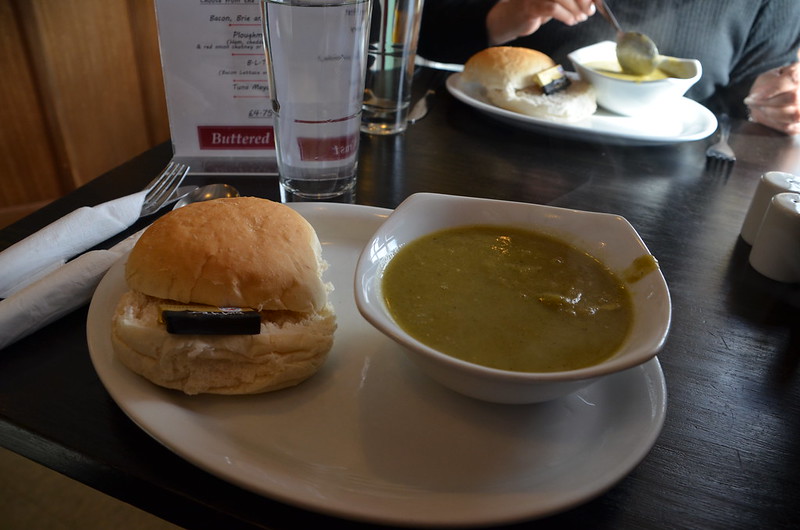
My tasty roll with a foil-wrapped pat of butter waiting to be spread on it. My homemade soup; I'm 99.99% sure it's leek. I know for certain that it totally hit the spot as the beginning dish of lunch at Buttered Crust.

DSC_1011

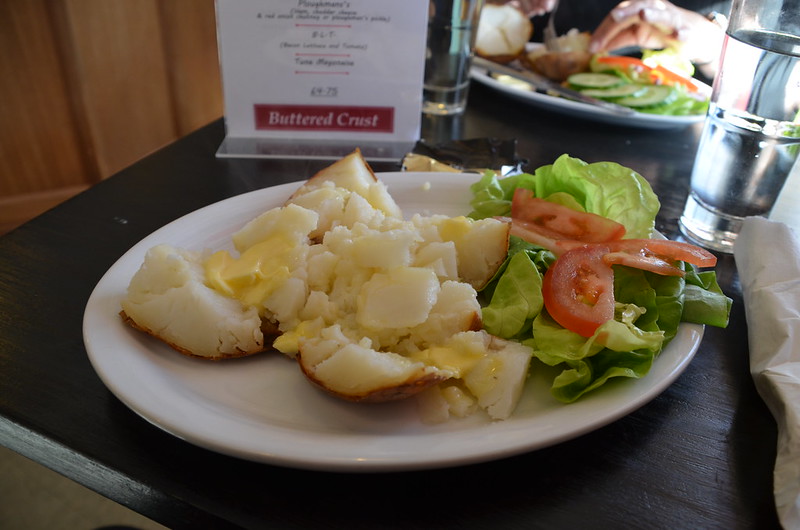
The rest of my totally satisfying lunch, a butter-melting jacket potato and fresh salad. A light, yet filling meal, the perfect lunch to enjoy before walking along the streets of a lovely Welsh village and then getting back on the coach to head for our next stop.

Friday, November 28, 2014

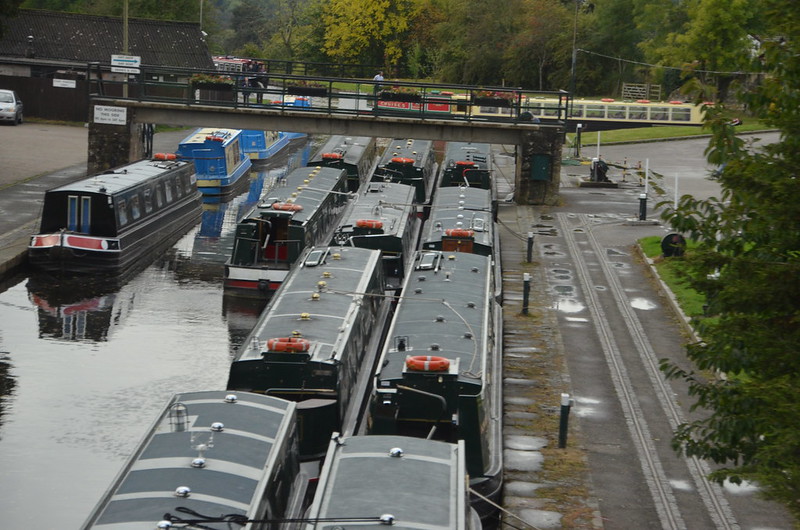
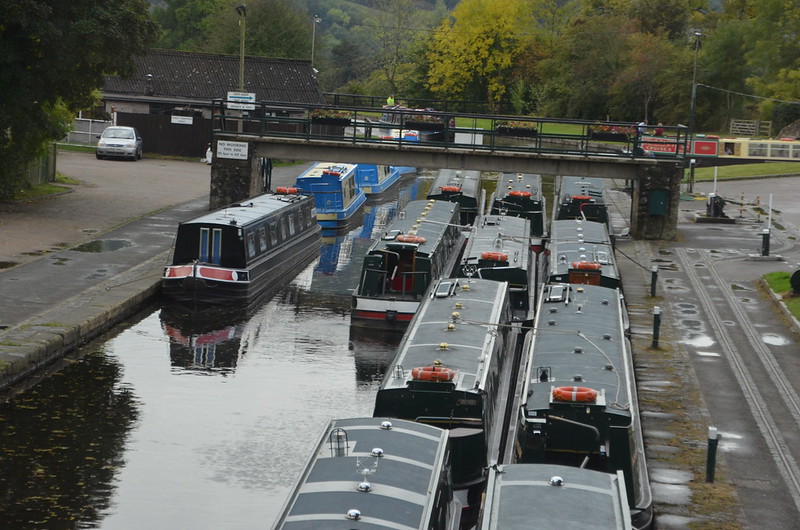
ESHT 2014 - Several photos of boats, a canal, and a footbridge, taken through the coach window

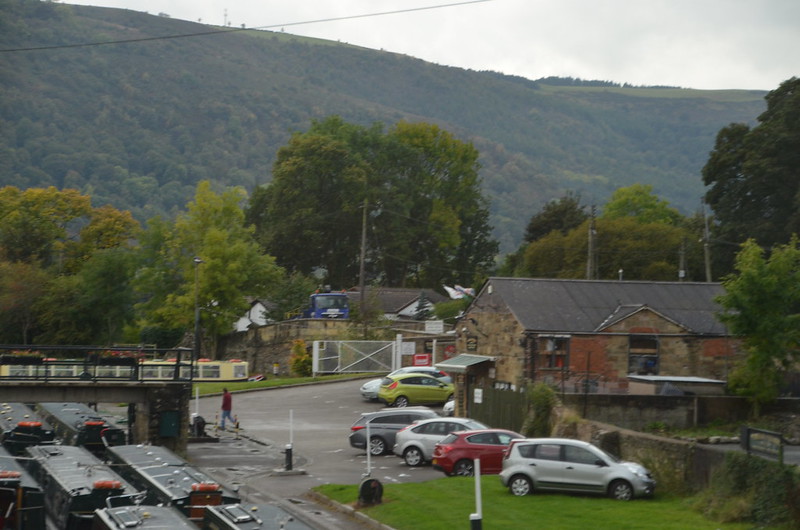
In Wrexham, our coach drive Tommy made a valiant effort trying to cross the bridge from which I took these photos--it's on the New Road and goes over the canal. The bridge turned out to be too narrow and awkwardly angled for us to continue, so he backed off it and parked nearby in a coach park. We didn't have to walk far to experience something wonderful, up close and personal--those photos tomorrow, promise!

DSC_0888

Right out of the camera, not straightened or altered in anyway. Isn't it an enticing sight?

DSC_0889

This one's a bit blurry, but since it has that yellow and green boat beyond and to the right of the footbridge, I just have to show it to you. Where, you may wonder, on what is that boat floating?

DSC_0894

There's the yellow and green boat again, with a red and white sign at the end. The gold lettering says Aqueduct Cruises. Yep, aqueduct. Isn't that something high up in the air that moves water, built centuries ago by Romans? As I looked out the window, listening to tour director Anna telling us facts about it, I got more and more excited.


Found on the Internet: Pontcysyllte Aqueduct - They call it 'the stream in the sky.' Pontcysyllte means 'the bridge that connects.' It consists of a cast iron trough supported 126 ft. above the river on iron arched ribs carried on nineteen hollow masonry piers (pillars). Each span is 53 ft. wide. To keep the aqueduct as light as possible, the slender masonry piers are partly hollow and taper at their summit. The mortar was made of oxen blood, lime and water. Kind of like treacle toffee. The aqueduct holds 1.5 million litres of water and takes two hours to drain. The structure is 1,007 feet long, with the River Dee running beneath it. The work was undertaken by Thomas Telford and supervised by the more experienced canal engineer William Jessop. The first stone was laid in July 1795. It was completed in 1805 using local stone. This is the largest aqueduct in Britain. It's fed by water from the Horseshoe Falls near Llangollen. The water runs through an iron trough that measures 11 feet 10 inches wide and 5 feet 3 inches deep. It is a Scheduled Ancient Monument; a Grade I Listed structure and was granted World Heritage status in June 2009, putting it on an equal footing with the Great Barrier Reef and Statue of Liberty!

The towpath is mounted above the water, with the inner edge carried on cast-iron pllars in the trough. This arrangement allows the water displaced by the passage of a narrow boat to flow easily under the towpath and around the boat, enabling relatively free passage. Pedestrians, and the horses once used for towing, are protected from falling from the aqueduct by railings on the outside edge of the towpath, but the holes in the top flange of the other side of the trough, capable of mounting railings, were never used. The trough sides rise only about 6 inches (15 cm) above the water level, less than the depth of freeboard of an empty narrow boat, so the helmsman of the boat has no visual protection from the impression of being at the edge of an abyss. The trough of the Cosgrove aqueduct has a similar structure, although it rests on trestles rather than iron arches. It is also less impressively high.

Every five years the ends of the aqueduct are closed and a plug in one of the highest spans is opened to drain the canal water into the River Dee below, for inspection and maintenance of the trough.

DSC_0897

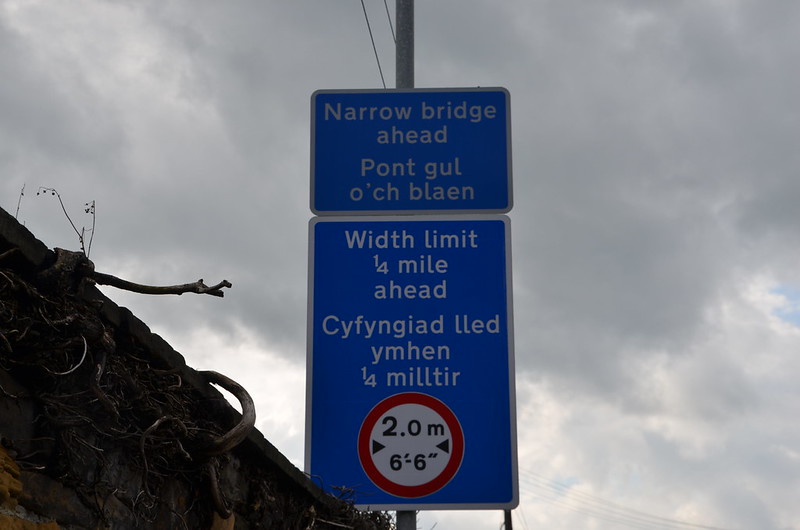
A sign, in English and Welsh, about a bridge beyond where we parked. I wonder if there was a sign about the one that we tried? I didn't find one when I Google-walked around and over the bridge. I did get to see its narrow width and awkward angles. To my non-coach-drive-eye, our coach carrying 52 tour-goers was just too long. I'm so glad that the coach park was as close as it was to the aqueduct. Yea for us! And it didn't rain!

Thursday, November 27, 2014

ESHT 2014 - Out of Bristol and we're on the way to Wales! Wales, where it turned out that we had a whole lot for which to give thanks. More about that in a future post.


I opting for ESHT 2014 instead of England Scotland Heritage Tour 2014, y'all. Less typing.

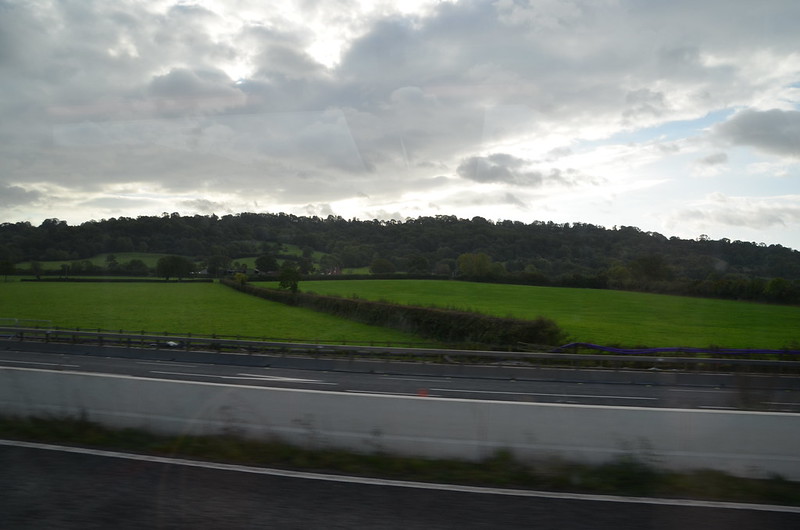
DSC_0830

Lots of photos taken through the coach windows on this tour. Across the highway, a hedgerow.

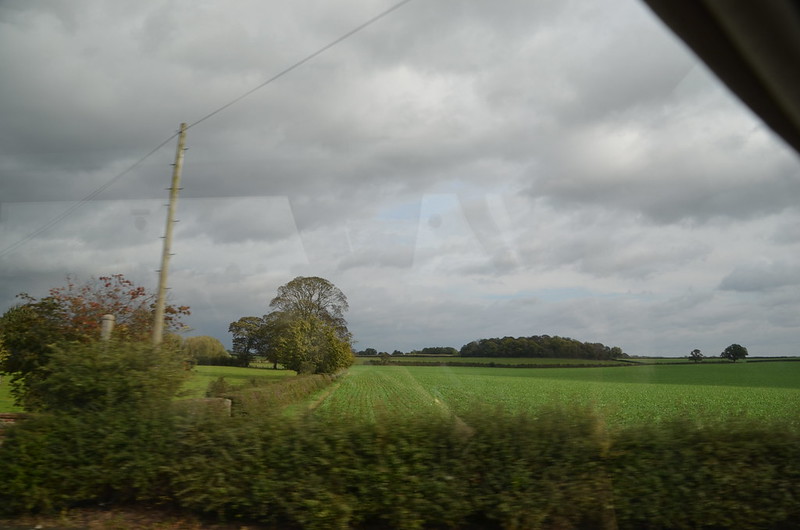
DSC_0845

Another pretty sight seen from my window. Each person on the tour decided to take the optional North Wales Excursion. According to our itinerary: "Out of England and into Wales!" So, when we left Bristol and changed the tour route somewhat with the scheduled stop in Chester to take place after our excursion. That way we didn't have to backtrack! Sounded great to one and all.

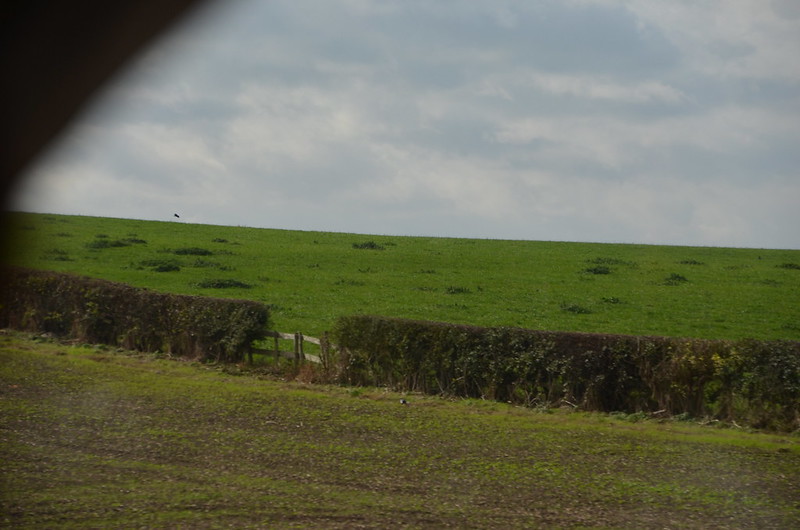
DSC_0855

A gate in the hedgerow. I think that's a bird flying above the left part of the hedgerow.

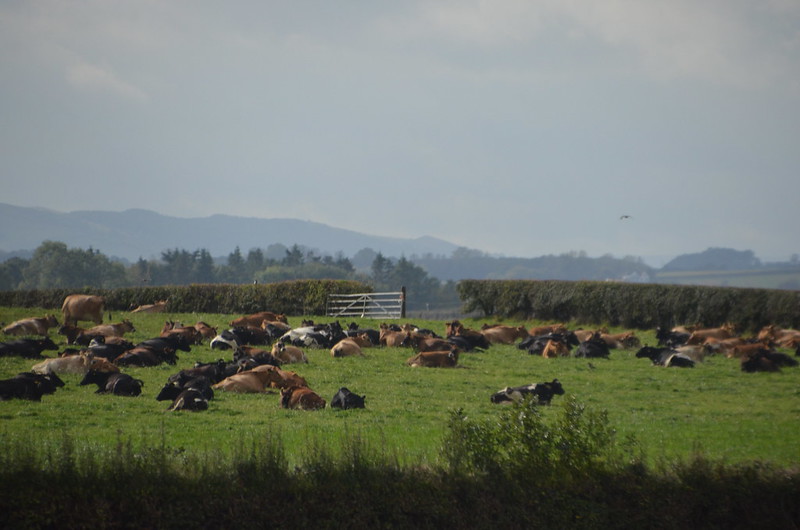
DSC_0857

An even wider gate doesn't interest this herd of cows at the moment. There's a white house far in the distance beyond the right hedge, and a bird flies above that hedge, too.

DSC_0858

No, that's not some sort of exotic cloud formation above the trees. It's a reflection to the beautiful gray topknot of one of the ladies on the tour.

DSC_0859

Seeing these darkening skies made us wonder what weather we'd find at our first stop.

DSC_0860

Finally, some autumn foliage! Yes!

DSC_0861

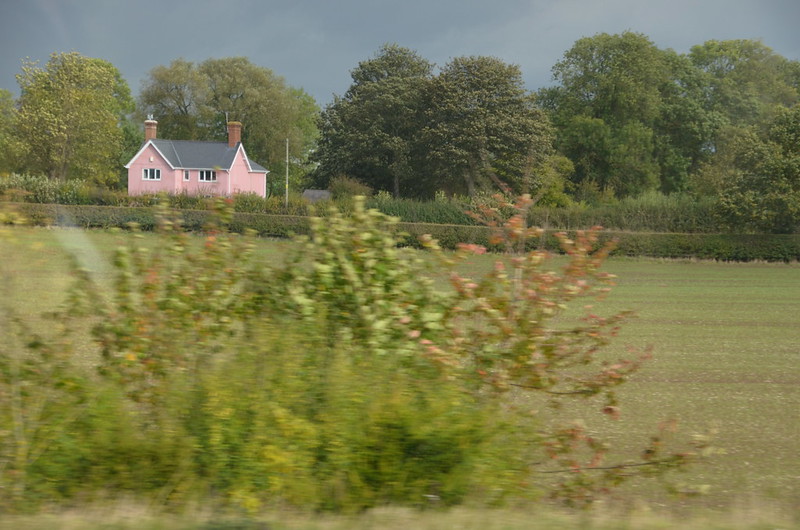
Must share the pink house with the two brick chimneys. I'll bet their garden (what those in the UK call their yard) looks great!

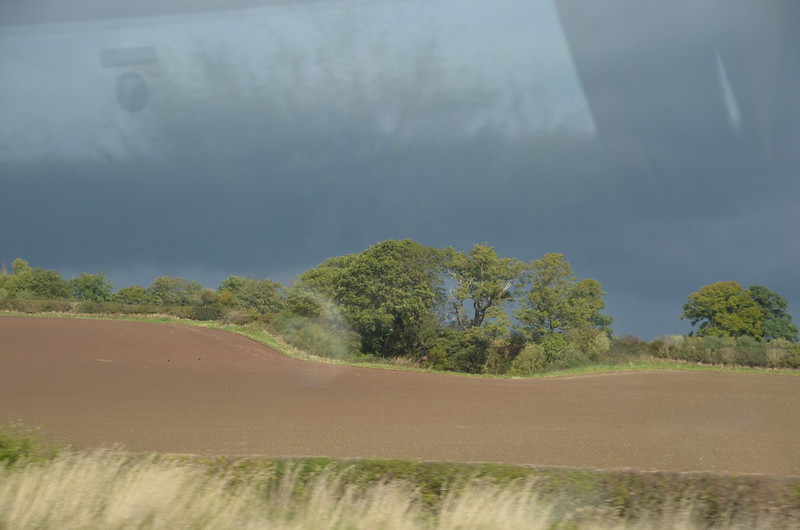
DSC_0862

Excellent example of a field that follows the contour of the land--I wonder what gets planted there and when. It was already October 9 when I took this photo--ready for spring, maybe?

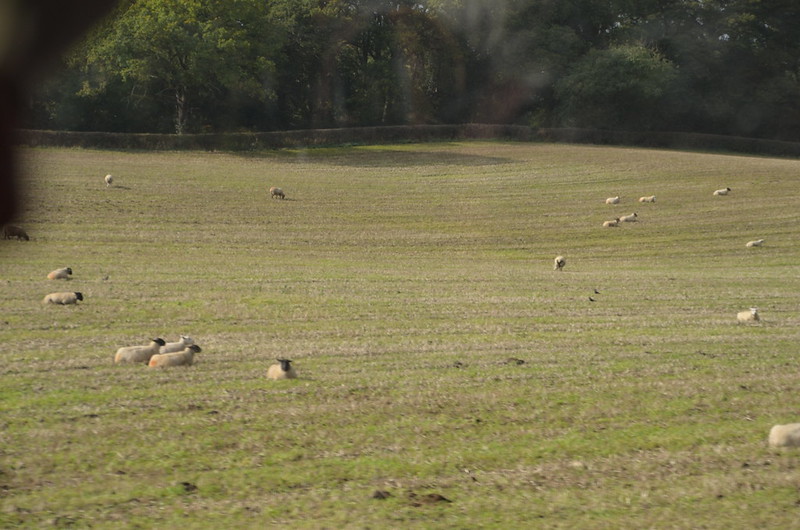
DSC_0867

Sheep and birds share the rolling field and the sunshine.

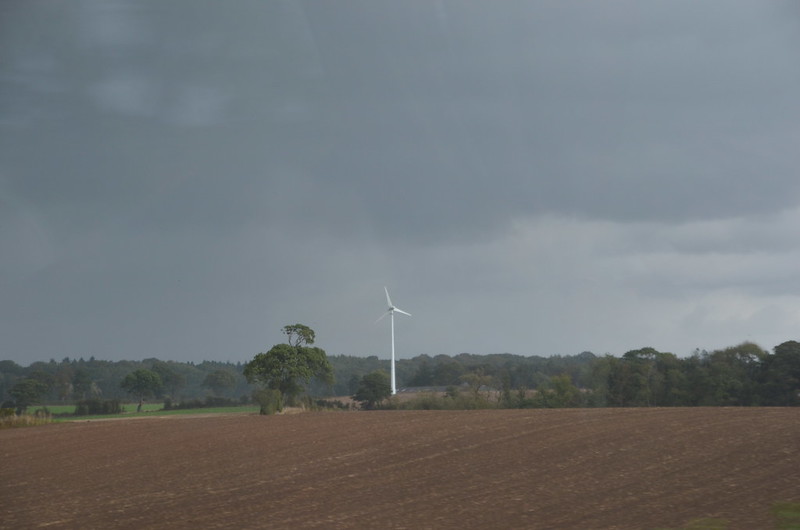
DSC_0874

The second wind turbine that I photographed on the tour.

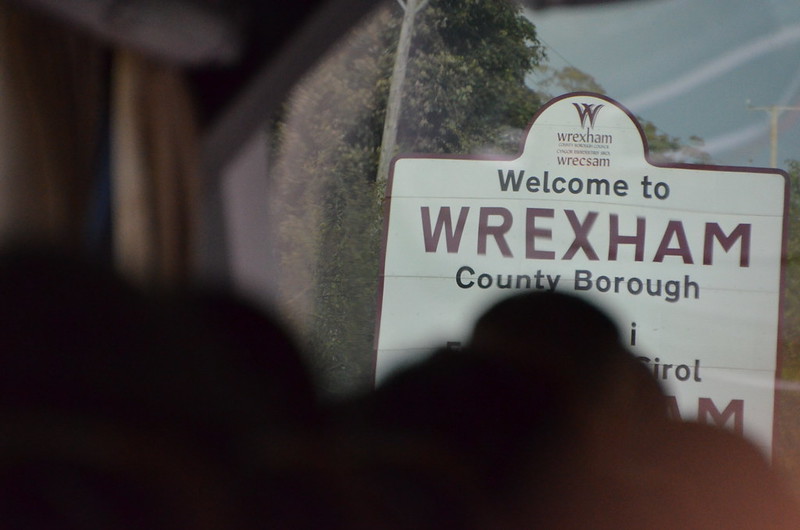
DSC_0883

Wrexham means we're in Wales! Little did we know at that moment the foreshadowing of the phonetically and appropriately named town. More on that in a future post.