Showing posts with label sculpture. Show all posts

Wednesday, September 2, 2015

UPDATE and a quick look at the southernmost piece of public art across the street from work, with me also in two of the photos

UPDATE: I woke up at 5 a.m. and went back to sleep! I didn't wake up again until the alarm went off at 6:30 a.m. I cannot remember the last time that happened, y'all! Pleased as punch! I nibbled while at work--Ritz crackers, green grapes, Cacio de Roma sheep cheese from Italy, Sun-Maid Raisins, Mariani Prunes, and water. So, since I knew I'd be pretty hungry after work and that the food I had cooked last night ended up tasting all wrong although in the past it had tasted very good--chemo-induced-taste-changes rampant this time--I decided to stop by Subway after I got off the bus near home. I walked in and ordered a six-inch tuna on wheat with shredded lettuce and tomato, an individual-sized bag of Lays Classic chips, and a cup of Coca-Cola. I walked on home and enjoyed every single bite! Then, I had two milk-chocolate-covered-dried cherries for dessert. Now, almost five hours later, I'm not hungry again. Anyway, it's too late to eat anything now if I want to be healthy about it, right? It's after 8 p.m. So, I've had a pretty good day. I'm making sure that I stay awake until a decent hour because I'd like to experience another great night's sleep.

iPhone pix

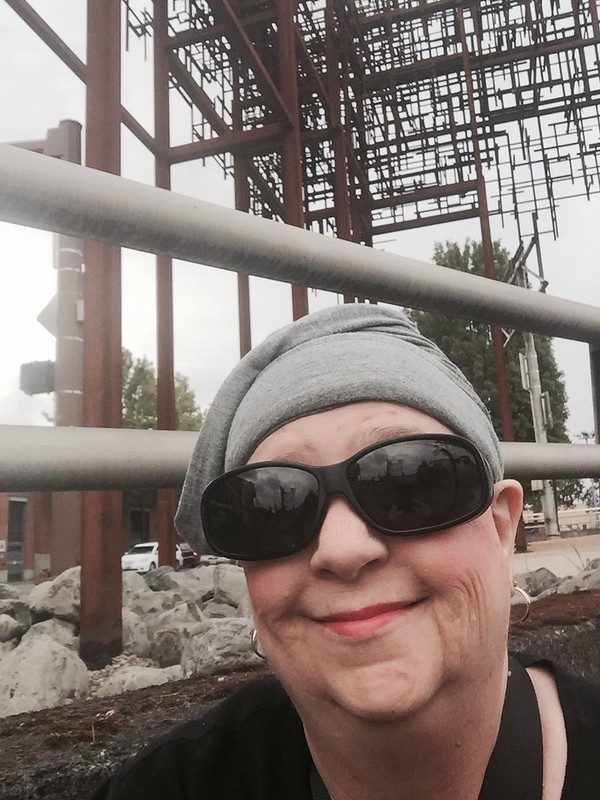
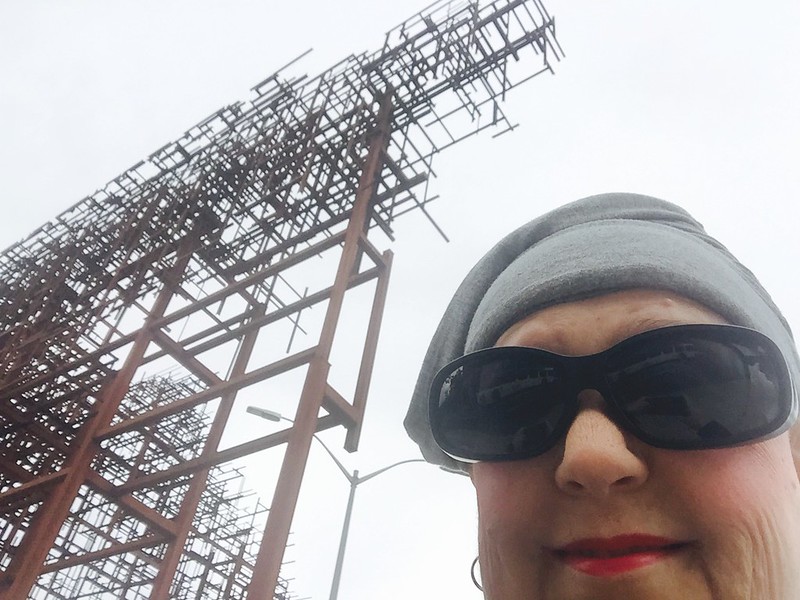
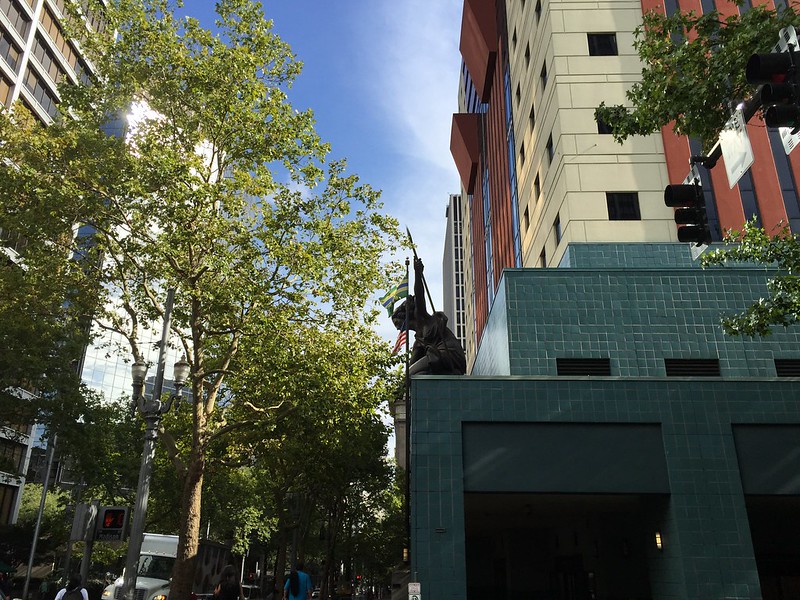
When I got off the 6 bus near work, I decided to take some photos of myself with the public art in the background. I've grown to like this controversial work named Inversion Plus Minus. I thought it would look good behind my gray, oh-so-Portland-hat, that Lamont bought for me the last time I had chemo. He walked from Kaiser on Interstate over to Mississippi Avenue in NE Portland, ate lunch, and then noticed a boutique. He found this very soft hat. Surprisingly, it is made of bamboo and spandex and gets more comfortable every time I stretch it over my big head. In this photo, I've stopped on the traffic loop that has a sidewalk alongside it--it rises some feet from below where MLK runs south, so I'm facing north and standing below street level for SE Grand which is the street on the west side of my work building and is the street where the public art stands at the corner of SE Grand and the eastbound exit ramp of the Hawthorne Bridge.
iPhone pix

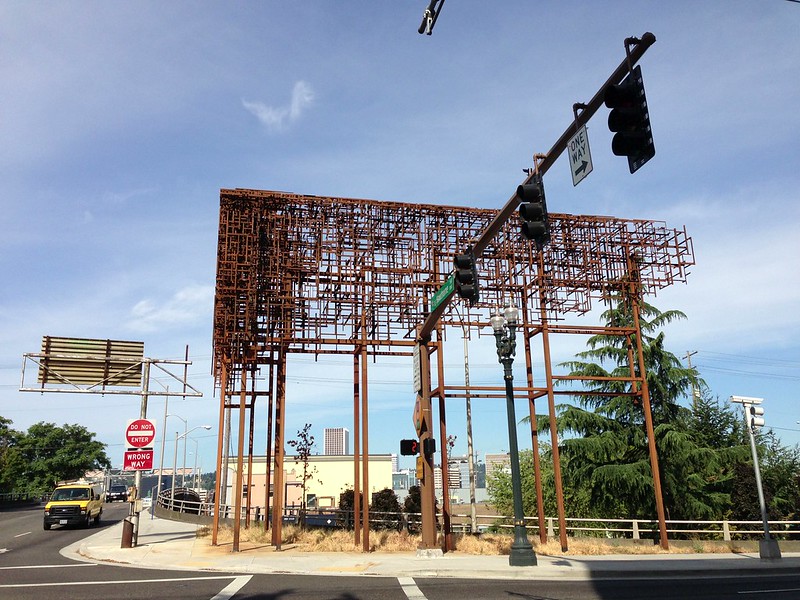
Another shot so that you get an idea of the height of this sculpture. I'm standing up on SE Grand beside it now.
IMG_1170

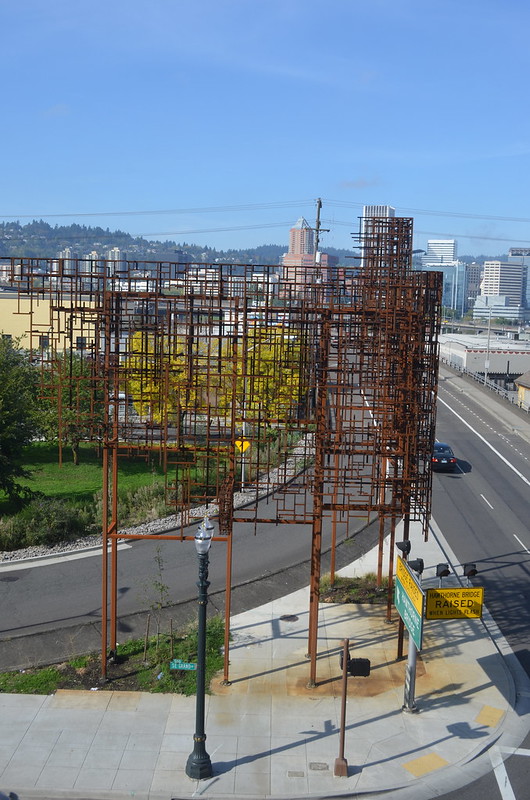
So you get the picture, here's one that I took of the southernmost piece of public art back in August, 2013. You can see the railing alongside the traffic loop I stood beside to take that first photo. You can see the Hawthorne Bridge which crosses over MLK, the lower street I mentioned when trying to let you know what I meant when I said that the traffic loop rises some feet from MLK. The traffic loop continues in a circle and takes traffic straight onto the westbound ramp onto the Hawthorne Bridge which is not visible but is to the right of the photo, in real life.
DSC_0760

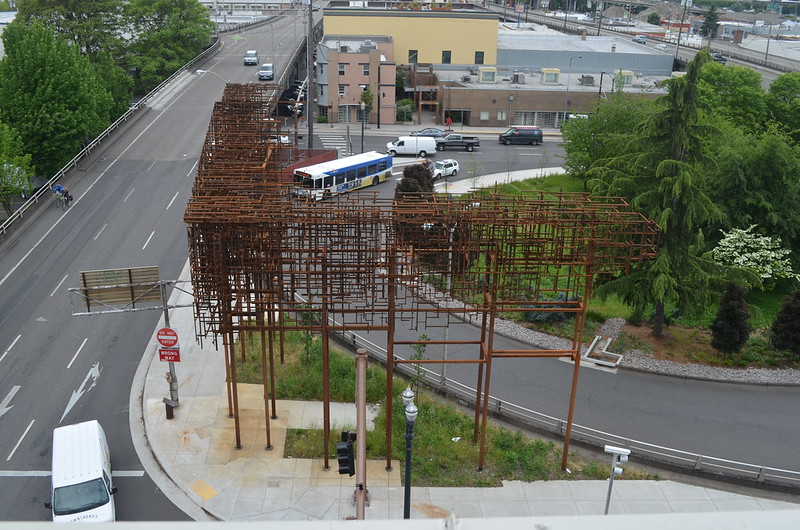
See, there's the westbound ramp going onto the bridge, as well as the northernmost piece of this public art installation, Inversion Plus Minus. I took this photo in October, 2013.
DSC_0096

And one more that I took in May, 2013, showing where I get off the bus down there near MLK which is the street with the two vans, the car, and the pickup on it. The sidewalk is up against the outer edge of the curve, along that wall which gets progressively shorter until it is waist-high when you reach the sidewalk seen at the base of the public art.

Tuesday, September 1, 2015

UPDATE and I was in downtown this morning!

UPDATE: I slept just fine last night and made it to work without difficulty. When I got home today, I cooked some ground turkey, tossed it with an envelope of taco spices, stirred in a can of low-fat refried beans and a little bit of mild salsa. I ate it with some tortilla strips. Every single bite tasted awful, way too salty, wrong tasting mess, period. I believe this is a side effect of the chemo because I've made this several times in the last few months, once even after Chemo Round One, when it tasted exactly the it always had when made with ground beef. Whew. It was awful! So, I'm throwing it away because I don't want to ruin the thought of it for myself. Anyway, I'm not hungry right now because I ate enough of it before I stopped and drank some water, then had some Nilla Wafers. The awful taste is erased, thank goodness.

Untitled

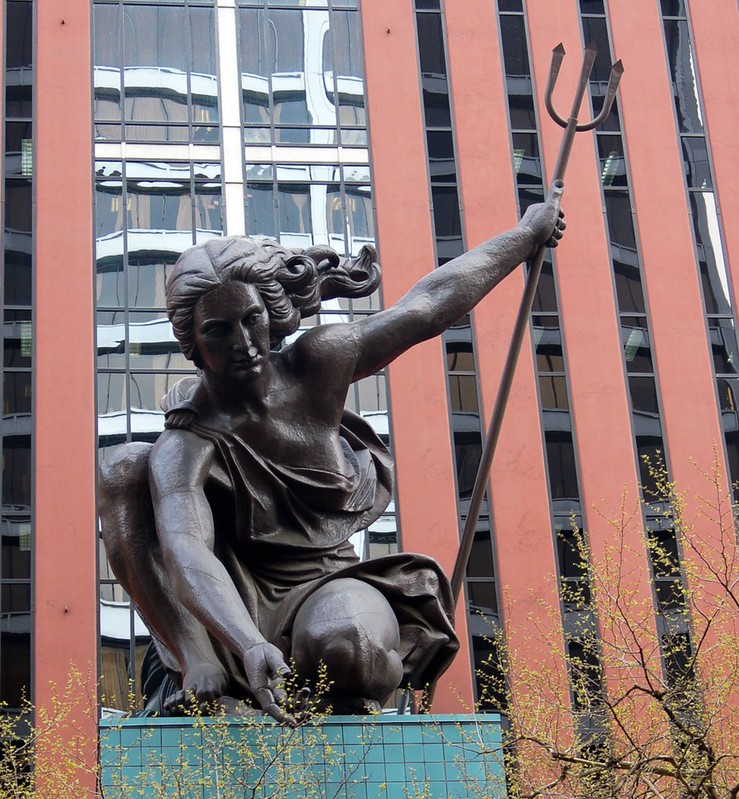
When I rode the first bus today, a 12, I decided to go across the Burnside Bridge and change to the next bus next to City Hall downtown. I longed to see downtown. It worked out very well. I took this photo of Portlandia in her perch at the Portland Building which is between SW 5th and SW 4th, right across the street to the north of City Hall. I really like this giant statue!

3916869368_c35ed8a10e_o_cropped_rotated

Here's a closeup that I took of Portlandia back in 2009, so that you can get an idea of just how wonderful she is. She's based on a figure in Portland's city seal--a woman, dressed in classical clothes, who welcomes traders into the port of the city. The sculpture is on the third floor landing of the Portland Building.

The sculpture is 36 feet tall but if Portlandia was magically to stand up, she would be over 50 feet tall; she weighs 6.5 tons. Portlandia is the second largest hammered copper statue in America (the largest is the Statue of Liberty). The statue was designed and sculpted by Washington, D.C., artist Raymond Kaskey and installed over the west entrance of the Portland Building in downtown Portland in 1985.

Kaskey retains the copyright on the statue’s image and so has avoided that work’s mass reproduction--no key chains, y'all.

Before being installed at the Portland Building, Portlandia was floated down the river on a barge and then transported through the city on a large truck. People lined up on the streets to see it. When it reached the building, the people crowded around the sculpture for a chance to touch it before it was installed out of reach.

Untitled

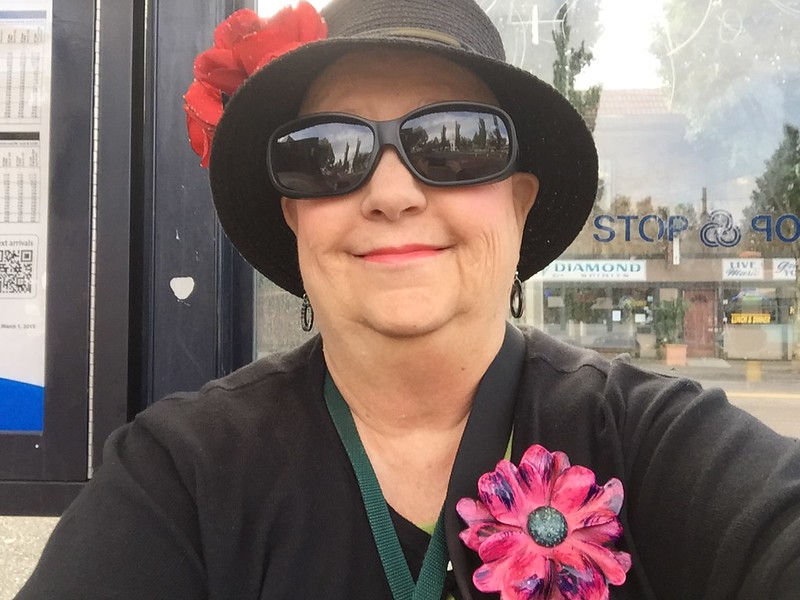
This is me this morning, waiting for the first bus of the to-work commute. The Blue Diamond is in the background--you can see it through the bus shelter's wall. I've had this hat for years; in fact, I believe that I bought it in Jackson, Mississippi, before Mama and I moved here in June, 2006. I added those fabric roses with the plastic dew drops. Love them!

Sunday, November 30, 2014

ESHT 2014 - More sights I photographed during our aqueduct adventure--my head swiveled every which way, seeing so much of interest


DSC_0912

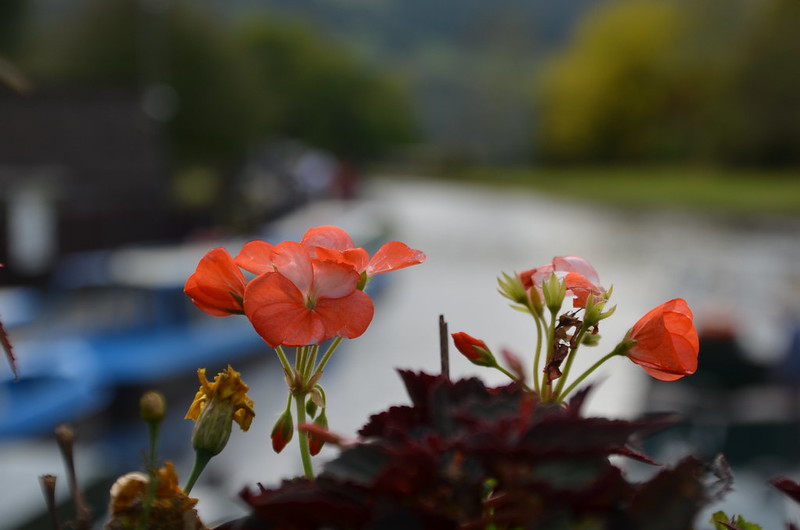
The flower boxes on my left side as I crossed the footbridge caught my eye as I looked around, noticing so many interesting sights.

DSC_0915

To my right, beautiful blossoms with the aqueduct in the background.

DSC_0916

Back to the left, striped petunias! I had no idea these even existed.

DSC_0917

You can tell just how bright the sunshine was in this particular photo. Our luck held, no rain even with that gray sky in the distance. There on the left of the canal, James photographs Martina--a very nice couple among many fine folks in our tour group. One of these days, I hope to see his photos because I imagine, no, I know that they will be outstanding!

DSC_0918

I turned around one more time before walking down the steps and off the footbridge. Am I ever glad that I did because I decided to zoom in on the bridge on the New Road. I wonder how old it is? Very old is my guess. See those two gray trapezoid shapes atop those short, pillar-like structures towards the left of the bridge. There's a wrought iron gate there. Well, I assume it's a gate, but why would a stone wall on a bridge have a gate, or an opening, for that matter? Anyway, you can see through it the different colored stones which are on the inside of the bridge's opposite wall.

DSC_0895

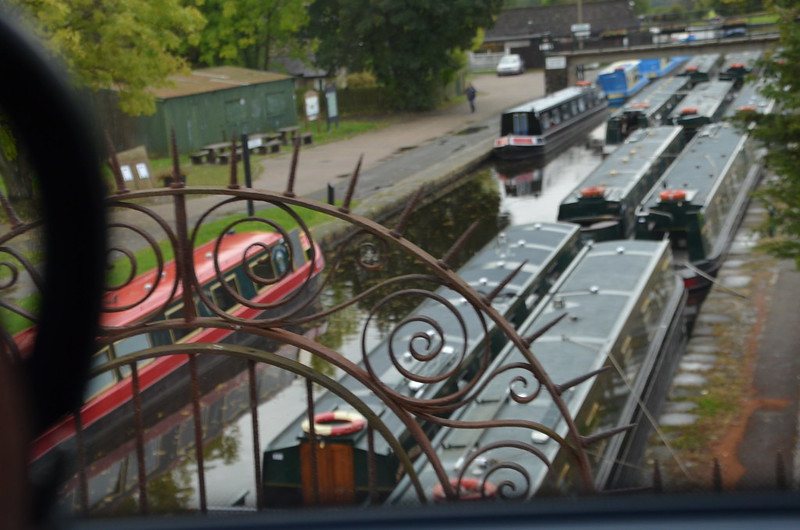
So, when I noticed the wrought iron in the close up of the bridge, I remembered a photo that I had taken through the coach window while we backed off the bridge. Now it makes sense! Thanks, zoom lens!

DSC_0920

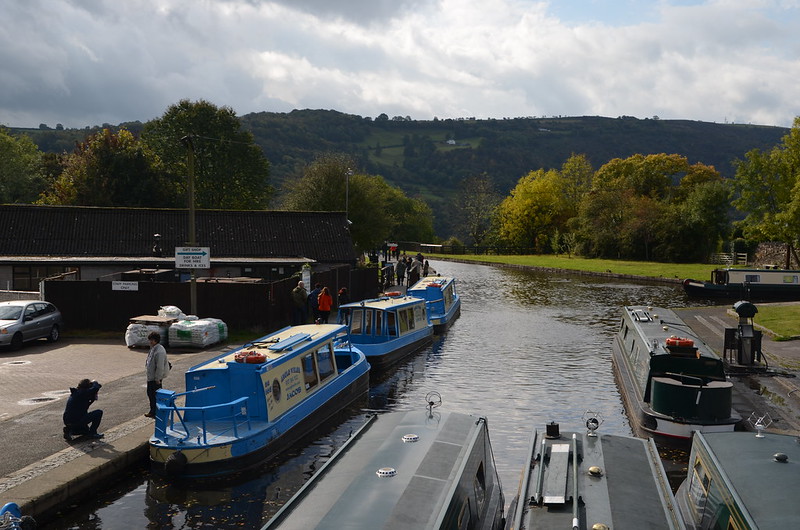
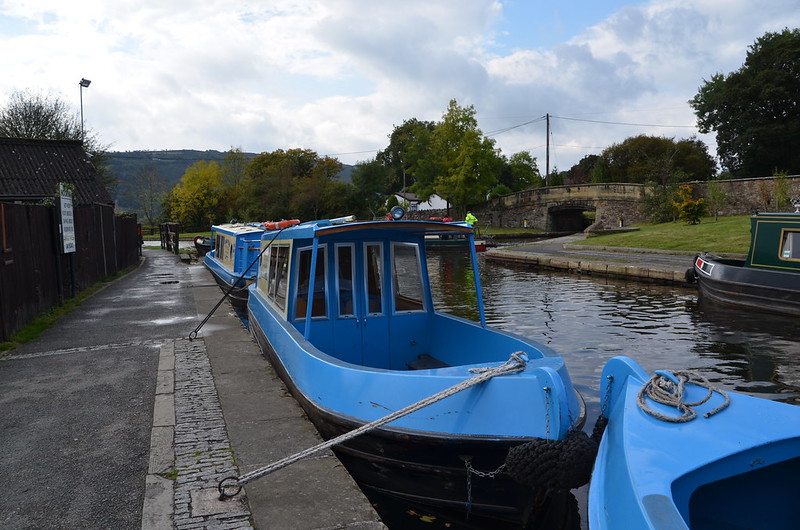
Now I'm off the footbridge and on the towpath. You can see the bridge that the Prince came through, over on the right side of the photo. Notice the yellow-green jacket right at the roof of the blue boat? That's the man on the Prince, guiding it through the turn, per the instructions given to him when he rented the narrow boat. In looking at Google Maps and trying to follow that canal visible underneath that bridge, I believe that you go to Llangollen that direction. Our next coach stop--Llangollen!

DSC_0924

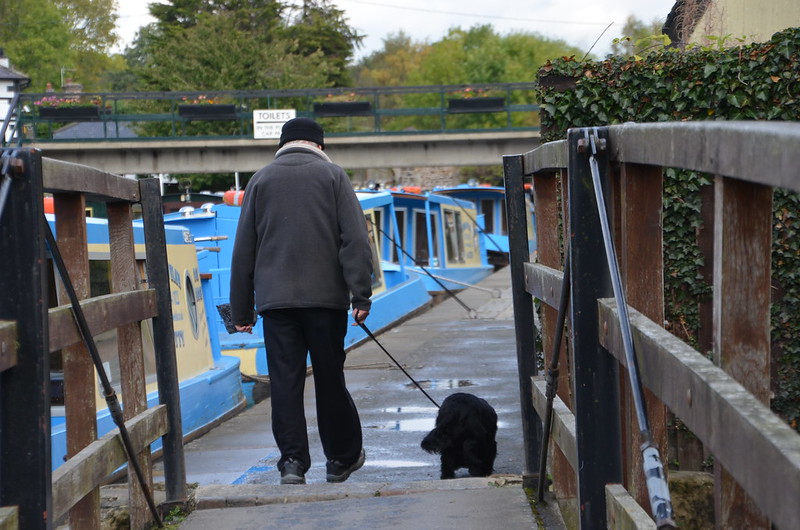
As I walked along the towpath I noticed these two enjoying their walk. So, after they passed, I looked behind me, hoping to get a photo of this gentleman and his friend. Not as good as I wanted, but I think it shows their comfortable relationship. I also like that you can see the footbridge and its flower boxes in the distance.

DSC_0927

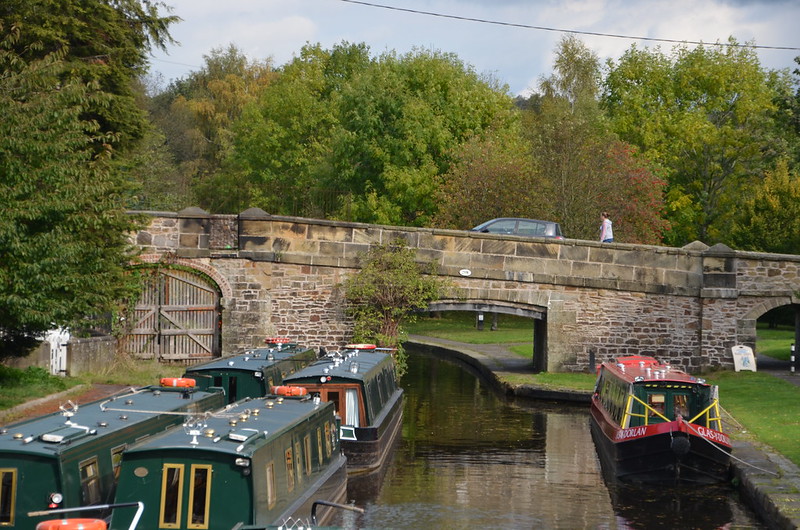
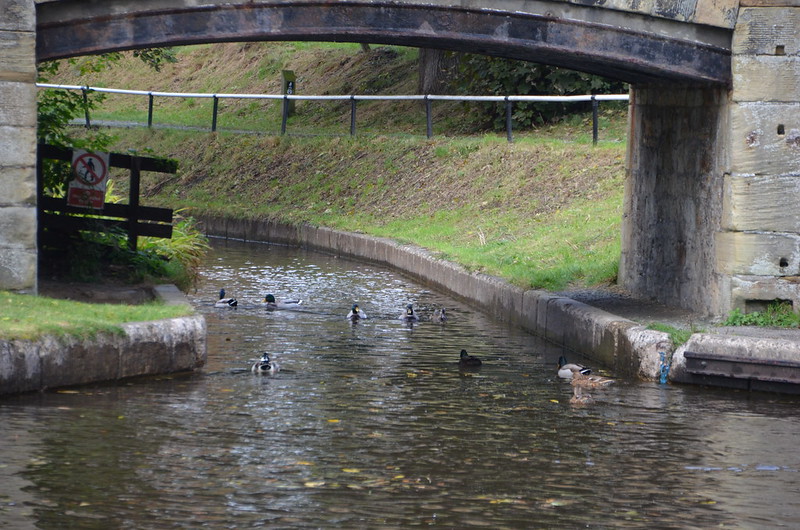
Across the way, ducks in the canal that comes underneath the bridge, the one that the Prince used to get onto the canal on the aqueduct, the one I believe goes to Llangollen--it's labeled the Shropshire Union Canal Llangollen Branch on Google Maps. Looks like you're not allowed to walk along this section of this canal, maybe elsewhere but not here although I did follow it on Google Maps and couldn't tell if there is walking space provided alongside it because the trees lining both sides block the view from above, so I dropped the Street View icon in there and saw a towpath! I've walked along the canal! My, oh, my. Would I ever like to be able to afford to rent one of those narrow boats and make this trip! What an adventure! Gorgeous scenery, lots of stone bridges to go under, all sorts of narrow boats going either way along the canal, and then I came to the Llangollen Moorings where quite a few boats had tied up. You buy a mooring ticket, park, and go on the towpath where you will. I imagine there's a time limit on the ticket.

DSC_0929

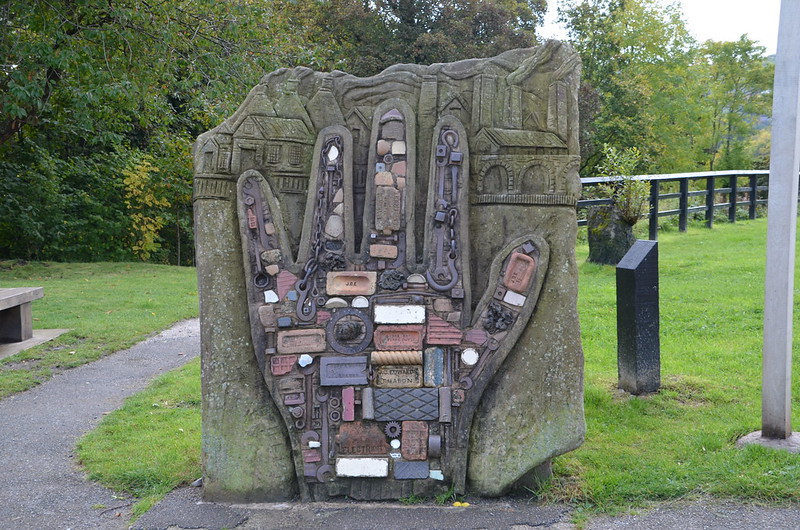
Back to my side of the canal, along the towpath, a sculpture. I like it. I found it labeled the Hand of Industry on several Web sites. Once you take a look at it, that certainly makes sense.

Tuesday, October 21, 2014

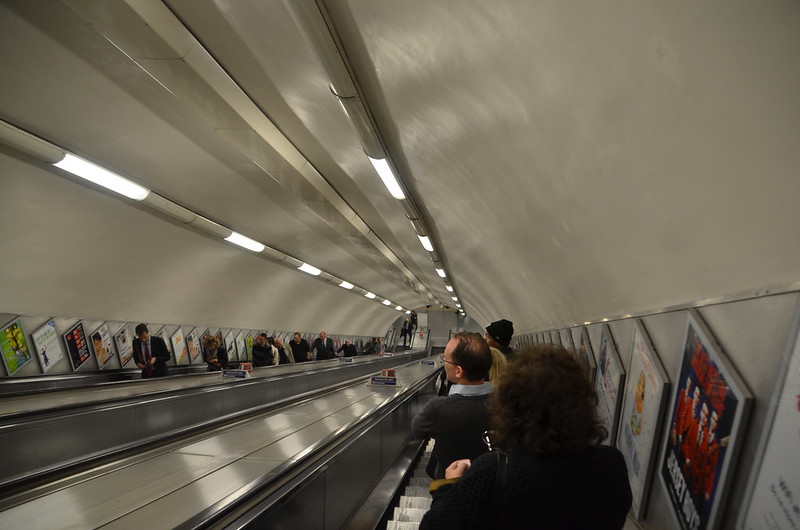
You go up the escalator, you go down the escalator. A multi-story escalator. In between, you catch some rays at Green Park. England Scotland Heritage Tour, 2014


I live with a fear of heights and motion sickness, plus a pair of 66-year-old knees. Guess where I went once I'd taken this photo, motion-sickness-acupressure-bracelets on each wrist? To the right to hold on for dear life so that this blessed escalator could take me up to street level. Our goal, to spend a few minutes in Green Park.


You see, when I got my first paying job after high school I bought a book with my first paycheck, a lovely, over-sized book filled with memorable photographs of London taken in the late 1960s. I lost that book somewhere, but I've always remembered a particular photo of Green Park. My photo is not a match for that one--it was in the trees, dappled sun and shadow. Mine, flooded with sunshine, shows you the Park Deckchairs, something I could have gotten in and out of back in the late 1960s.


There goes Juliet on the right, circling Diana of the Treetops, the combination sculpture and water fountain for people and dogs which was moved just outside the new Underground entrance in 2011. Originally installed elsewhere in Green Park in 1954 and sculpted by Estcourt James--Jim--Clack in 1951 after he won the competition to create a fountain  for the park, the gilding was added prior to the move to this location. The sculpture was commissioned by the Constance Fund, set up by Constance, widow of sculptor Sigismund C. H. Goetze. In his memory she wanted to "encourage and promote the art of sculpture in London parks."

DSC_0163

We didn't take time to walk out into the park since I was on a tight schedule--my solicitor friend Richard Taylor had invited me to be his guest at the Quit Rents Ceremony and I needed to meet him at 2:30 p.m. in front of the Royal Courts of Justice on The Strand which is within walking distance of our destination, Covent Garden. Now for the scariest part of the ride on London's world-famous Underground--the down escalator. Once again, I held on and concentrated on realizing that I would stay upright and make it to the bottom so we could jump on a train and make our way to Covent Garden.

Friday, January 24, 2014

Public Art, outside the Moda Center which used to be the Rose Garden--it's where the Portland Trail Blazers play NBA basketball


I took this photo at 3:06 p.m. on March 9, 2013, a particularly nice blue sky day for us. That's I-5 you see there behind The Little Prince. Those buildings are in an area known as the Lloyd District which is in Northeast Portland. One of these days I plan to be in good enough shape to walk there from my apartment. I'll take my camera and take photos to share with y'all!

In the past I've taken several other photos of this public art and have posted them on the blog. Click here to see four of them. In case you don't have time to click there to see the photos and read about the sculpture, I've copied and pasted the info for you here.

Bits I discovered online about the sculpture.

  • The Little Prince, by Ilan Averbuch. Copper and steel, 1995.
  • The Little Prince is a partially buried copper crown located at the south end of the arena in the Rose Quarter. It is a piece about imagination, desires and aspirations, conquests and struggles. It is the job of the viewer to create the story that goes along with the crown. Is it a victory and position of honor waiting to be claimed, or is there another story? Only the viewer can say.
  • Ilan's inspiration for this piece was the "Little Prince" by Antoine De Saint-Exupery, in particular, the first chapter where he talks about his drawing of a boa constrictor swallowing an elephant being misunderstood as a hat.
  • Ilan Averbuch's "Little Prince" and the Portland Trailblazer's Rose Garden Arena. Portland, Oregon . . . legend has it that the crown will be stood upright when the Blazers with their next championship.
  • The Little Prince, 1995, is a gigantic fallen crown, an image of a ruin of ancient majesty, of one-time splendor, and a version of another recurring theme in Averbuch’s work: the obsolescence of the monumental, former monuments in the soil, like ancient relics.
  • The Little Prince (Ilan Averbuch, 1996) is a copper crown, standing 15 feet tall in front of the Rose Garden. Inspired by the French children's story by Antoine De Saint-Exupery, the artist asks that you use your imagination to think of a story behind the crown. The crown is resting on its side perhaps waiting as a prize to be claimed or as a symbol of a triumph to come.

Friday, September 20, 2013

One more view of Running Horses, Tom Hardy, 1986, Bronze SW 6th and Madison, part of the Public Art on the TriMet MAX Green Line

Click here for a trip to City Daily Photo, transporting you around the world every day.

running_horses_5_PM

While looking for more public art photos to feature, I came across this one of Running Horses. I took it on Feb. 20, 2009. I've been racking my brain trying to figure out why the sun was shining like this and that flowering tree is blooming, plus the bloom on that shorter plant--I think it is a camellia--in February?

Confusing. So I've looked back at my blog and found a completely dry photo that I took on Feb.5, another one where a lady's sitting outside at an ice cream place, bundled up in her coat, but it's sunny, no rain. So, February 2009 must have been a less wet month than I would have thought, with enough sunshine and warmth to bring on the blooms.

Wednesday, September 18, 2013

Constellation, three sculptures by Tad Savinar, 2000, Bronze -- No. 3, A Neighborhood Gardener

Click here for a trip to City Daily Photo, transporting you around the world every day.

A Neighborhood Gardener. From the plaque at the park: "These three sculptures are a visual representation of the connections between our civic gardens and our neighborhoods, and of the pivotal role we have as stewards of those relationships." This project was funded by the City of Portland's Percent for Art Program, administered by the Regional Arts & Culture Council.
  gardener_1_PM

Garden shears in her right hand, she stands still, perhaps reflecting on her garden and the work she's accomplished. You can see her gardening gloves hanging from her left hip pocket in this photo. I found this description on the Internet: Standing female figure representing the neighborhood gardiner is actually a portrait of long-time community organizer, Carolyn Marks-Bax, who was selected for this honor by the neighborhood. I found it by accident, since gardener is misspelled.
  gardener_3_PM

I found on the Internet that the statue modeled after a local gardener, Carolyn Marks-Bax, who gardened near the park in the Sullivan's Gulch neighborhood. She may still garden there, I have no idea. When I go back some day to see this series of sculptures again, I plan to pay better attention to her.

Historical Information, from the City of Portland, about Holladay Park.

This park is named after Benjamin Holladay (1819-1887), known to many as "a sharpster, a con man, and a rake." He stirred things up wherever he went and was a bit of a dandy, dressing like a riverboat gambler. He was said to be "wholly destitute of fixed principles of honesty, morality, or common decency." In 1868 Holladay sold his stage coach business in California to Wells Fargo and moved to Portland to get involved in the railroad business. His goal was to build a rail line to California along the east side of the Willamette River. In order to do so, he spent a total of $55,000 in bribe money to help secure his company's endorsement. He also built two large hotels in the area where the park bearing his name is now located. Known as an extravagant spender, Holladay owned numerous mansions on both coasts and had over extended himself financially. He lost his railroad in 1876, and died in Portland in 1887.

Commissioned by the Lloyd Corporation and Pacific Power & Light in 1964, a concrete fountain featuring music and lights was installed in the park. Designed by Jack Stuhl, assisted by Ted Widing and Phillips Electrical, the musical fountain was favorite gathering place for park visitors. It was replaced in 2000, in conjunction with a major renovation of the park, by a spouting fountain designed by Tim Clemen and Murase Associates.

Three cast-bronze sculptures by artist Tad Savinar were added to the park as a percent-for-art project in 2000. Entitled Constellation, the project illustrates the connection between the personal front yard garden and the civic park garden through three distinct elements: a vase of cut flowers, an abstract molecule containing elements of a good neighborhood, and the figure of a home gardener, shears in hand. The objects in the molecule were selected by the Sullivan Gulch Neighborhood Association and the gardener was modeled after Carolyn Marks, a longtime neighborhood activist.

Tuesday, September 17, 2013

Constellation, three sculptures by Tad Savinar, 2000, Bronze -- No. 2, Flowers From a Neighborhood Garden

Click here for a trip to City Daily Photo, transporting you around the world every day.

Flowers From a Neighborhood Garden. From the plaque at the park: "These three sculptures are a visual representation of the connections between our civic gardens and our neighborhoods, and of the pivotal role we have as stewards of those relationships." This project was funded by the City of Portland's Percent for Art Program, administered by the Regional Arts & Culture Council.
  bouquet_2_PM

One view of the vase of cut flowers. I found this description on the Internet: A slender vase with a tall arrangement of flowers including hydrangeas and daisies.
  bouquet_1_PM

Another view of the cut flowers.

Historical Information, from the City of Portland, about Holladay Park.

This park is named after Benjamin Holladay (1819-1887), known to many as "a sharpster, a con man, and a rake." He stirred things up wherever he went and was a bit of a dandy, dressing like a riverboat gambler. He was said to be "wholly destitute of fixed principles of honesty, morality, or common decency." In 1868 Holladay sold his stage coach business in California to Wells Fargo and moved to Portland to get involved in the railroad business. His goal was to build a rail line to California along the east side of the Willamette River. In order to do so, he spent a total of $55,000 in bribe money to help secure his company's endorsement. He also built two large hotels in the area where the park bearing his name is now located. Known as an extravagant spender, Holladay owned numerous mansions on both coasts and had over extended himself financially. He lost his railroad in 1876, and died in Portland in 1887.

Commissioned by the Lloyd Corporation and Pacific Power & Light in 1964, a concrete fountain featuring music and lights was installed in the park. Designed by Jack Stuhl, assisted by Ted Widing and Phillips Electrical, the musical fountain was favorite gathering place for park visitors. It was replaced in 2000, in conjunction with a major renovation of the park, by a spouting fountain designed by Tim Clemen and Murase Associates.

Three cast-bronze sculptures by artist Tad Savinar were added to the park as a percent-for-art project in 2000. Entitled Constellation, the project illustrates the connection between the personal front yard garden and the civic park garden through three distinct elements: a vase of cut flowers, an abstract molecule containing elements of a good neighborhood, and the figure of a home gardener, shears in hand. The objects in the molecule were selected by the Sullivan Gulch Neighborhood Association and the gardener was modeled after Carolyn Marks, a longtime neighborhood activist.

Monday, September 16, 2013

Constellation, three sculptures by Tad Savinar, 2000, Bronze -- No. 1, Isolated Molecule for a Good Neighborhood

Click here for a trip to City Daily Photo, transporting you around the world every day.

Constellation: Isolated Molecule for a Good Neighborhood. From the plaque at the park: "These three sculptures are a visual representation of the connections between our civic gardens and our neighborhoods, and of the pivotal role we have as stewards of those relationships." This project was funded by the City of Portland's Percent for Art Program, administered by the Regional Arts & Culture Council.

First, photos of the atoms in the molecule, followed by a wide shot of the sculpture in Holladay Park, NE 11th Avenue & Holladay Street. At the end of the post you'll find historical information about the park and more details about the sculptures, from the City of Portland. I took these photos November 6, 2010.
  molecule_milk_carton_PM

Milk carton.
  molecule_school_milk_carton_PM

Milk carton and school building, front view.
  molecule_school_PM

School building, back view.
  molecule_garden_spade_house_two_story_PM

Garden spade and house, back view.
  molecule_house_two_story_porch_PM

House, front view.
  molecule_neighbors_PM

Family. Has something been broken off in the center of this group of figures? It's the turquoise color showing at the top of those structures that makes me wonder.
  molecule_wide_shot_PM

The entire sculpture, not the best angle for seeing it clearly, what with the nearby tree trunks being almost the same color. And I missed a few of the atoms: An enlarged structure of a molecule featuring atoms in the shape of a garden tool, a milk carton, a coffee mug, a bagel, a house, a school, a family, and trees --all the things that make a good neighborhood. Now I have a reason to go there again someday and take a longer look, see what else I can photograph.

Historical Information This park is named after Benjamin Holladay (1819-1887), known to many as "a sharpster, a con man, and a rake." He stirred things up wherever he went and was a bit of a dandy, dressing like a riverboat gambler. He was said to be "wholly destitute of fixed principles of honesty, morality, or common decency." In 1868 Holladay sold his stage coach business in California to Wells Fargo and moved to Portland to get involved in the railroad business. His goal was to build a rail line to California along the east side of the Willamette River. In order to do so, he spent a total of $55,000 in bribe money to help secure his company's endorsement. He also built two large hotels in the area where the park bearing his name is now located. Known as an extravagant spender, Holladay owned numerous mansions on both coasts and had over extended himself financially. He lost his railroad in 1876, and died in Portland in 1887.

Commissioned by the Lloyd Corporation and Pacific Power & Light in 1964, a concrete fountain featuring music and lights was installed in the park. Designed by Jack Stuhl, assisted by Ted Widing and Phillips Electrical, the musical fountain was favorite gathering place for park visitors. It was replaced in 2000, in conjunction with a major renovation of the park, by a spouting fountain designed by Tim Clemen and Murase Associates.

Three cast-bronze sculptures by artist Tad Savinar were added to the park as a percent-for-art project in 2000. Entitled Constellation, the project illustrates the connection between the personal front yard garden and the civic park garden through three distinct elements: a vase of cut flowers, an abstract molecule containing elements of a good neighborhood, and the figure of a home gardener, shears in hand. The objects in the molecule were selected by the Sullivan Gulch Neighborhood Association and the gardener was modeled after Carolyn Marks, a longtime neighborhood activist.

Monday, May 28, 2012

Neons are in! Well, it's really just bright yellow, and this time without any street level matching colors, No. 7

staticmap_labeled

Here's the map of the intersection. We're focused this time on the southwest corner, labeled on the map as Pod: the Sculpture.
  color_yellow_streetcar_West_burnside_SW_10th_BeFunky

Who could resist a bright yellow Portland Streetcar in a series like this? Not I.

On the right you see a young woman with her hoop, entertaining the pedestrians who are crossing West Burnside on SW 10th Avenue, heading north at the corner. It appears no one paid her much mind once they'd passed her on the way to cross the street.

I've noticed that the majority of the pedestrians are wearing denim jeans, so that's a sort of matching. Plus those three boys have on shorts. Two of the three people between the brown poles have on baggy pants. And one bicyclist waiting beside the streetcar has on a yellow bicycle helmet. Tidbits of matching going on here.

At the very right edge of the photo you can see just a bit of the kinetic sculpture, Pod. If you're tall enough, you can reach up and touch part of it which makes it swing slowly back and forth, much like the girl rhythmically rotated her hoop with her hips.
  color_pod_BeFunky

Here's a photo that I took on October 16, 2010, which shows almost the entire sculpture--you're just missing the third leg. That black, bulbous shape is what one must reach up and touch or shove to make the more than 70 stainless steel rods sway in unison. I've actually seen the tips of the rods separate somewhat when the shove had some elbow grease behind it!

The building diagonally across from the Pod has been changed, with a different business on its ground floor. You'll get to see a symbol of that new business in a later post in this series.

Thursday, February 26, 2009

"Thor," coming and going

On Valentine's Day before I made it to Pioneer Courthouse Square, I came upon sculptor Melvin Schuler's "Thor," one of the public art pieces that dot two downtown Portland avenues, SW 6th and SW 5th, also known as the Portland Bus Mall. In January, 2007, when TriMet moved the bus operations to SW 4th and SW 3rd so that renovations to the mall could take place, including adding light rail, TriMet moved the public art for safe-keeping--here's what TriMet had to say about the process: Nearly all of the existing public art sculptures on the Mall have been temporarily removed to protect them during construction. The sculptures will be cleaned and refurbished, then relocated along the Central Mall at sites more congenial to viewing them in the round.

In the past few months as construction nears completion, some pieces have been placed in their new sites. "Thor" is one of them, created by Schuler in 1977. It's copper on redwood. It's on SW 6th between SW Taylor and SW Yamhill. Here's the view as I walked closer to it.
DSCN1339_thor_enhanced
And here's the other side of it, looking southward.
DSCN1344
Wouldn't that curved section make a great place to take a photo of someone special? At eight feet tall and a lovely verdi gris, it would make an effective backdrop.

Here's an interesting bit about sculptor Schuler:

A professor emeritus from Humbolt State University, Schuler received his BA and MFA from the California College of Arts and Crafts in Oakland, CA and studied at the Royal Academy of Fine Arts in Copenhagen, Denmark. He carves his sculptures from recycled old-growth redwood. In order for the work to weather the out of doors, he covers it with copper in the same way that the hulls of the American clipper ships were covered. The copper is placed shingle-like and fastened with bronze nails, hammered and then a cold patina is applied. His works can be found in many distinguished private and public collections throughout the US.