Showing posts with label coach. Show all posts

Friday, November 28, 2014

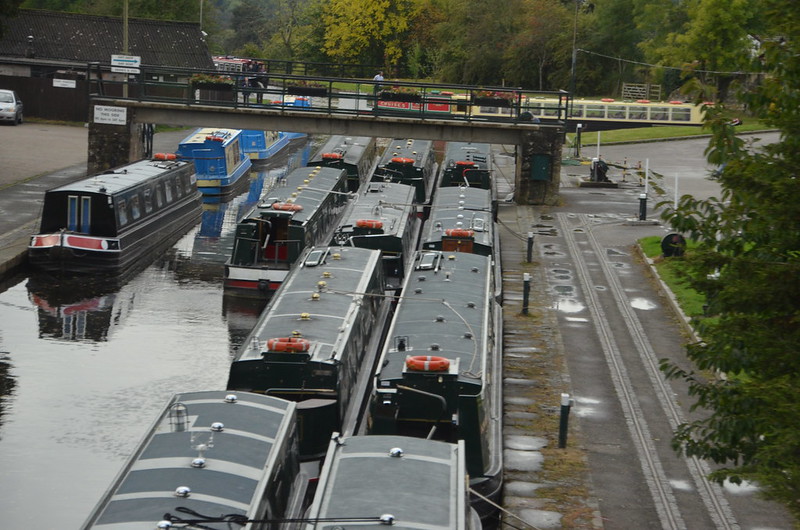
ESHT 2014 - Several photos of boats, a canal, and a footbridge, taken through the coach window

In Wrexham, our coach drive Tommy made a valiant effort trying to cross the bridge from which I took these photos--it's on the New Road and goes over the canal. The bridge turned out to be too narrow and awkwardly angled for us to continue, so he backed off it and parked nearby in a coach park. We didn't have to walk far to experience something wonderful, up close and personal--those photos tomorrow, promise!

DSC_0888

Right out of the camera, not straightened or altered in anyway. Isn't it an enticing sight?
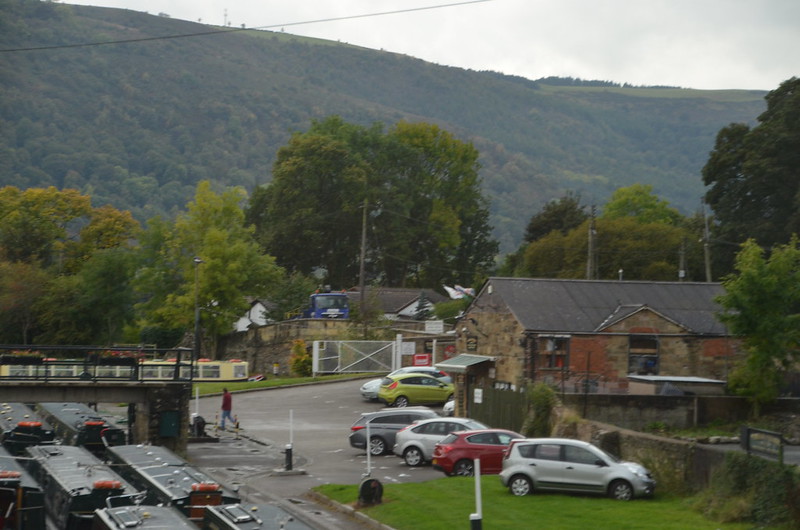
DSC_0889

This one's a bit blurry, but since it has that yellow and green boat beyond and to the right of the footbridge, I just have to show it to you. Where, you may wonder, on what is that boat floating?
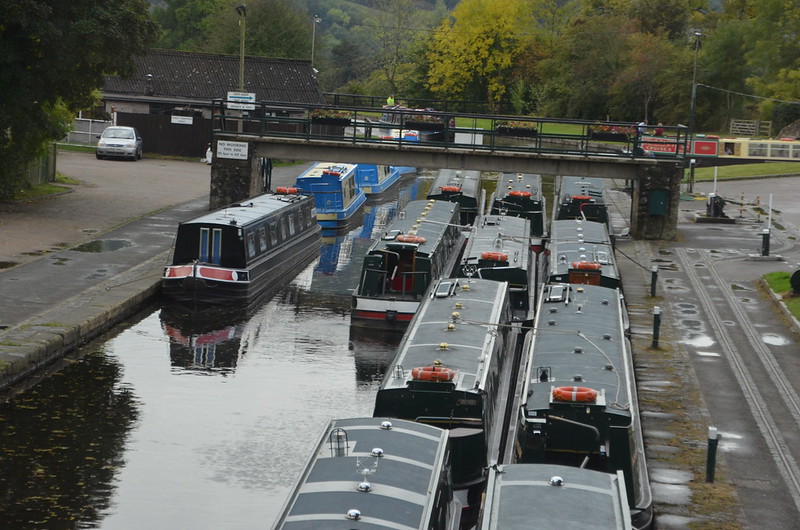
DSC_0894

There's the yellow and green boat again, with a red and white sign at the end. The gold lettering says Aqueduct Cruises. Yep, aqueduct. Isn't that something high up in the air that moves water, built centuries ago by Romans? As I looked out the window, listening to tour director Anna telling us facts about it, I got more and more excited.


Found on the Internet: Pontcysyllte Aqueduct - They call it 'the stream in the sky.' Pontcysyllte means 'the bridge that connects.' It consists of a cast iron trough supported 126 ft. above the river on iron arched ribs carried on nineteen hollow masonry piers (pillars). Each span is 53 ft. wide. To keep the aqueduct as light as possible, the slender masonry piers are partly hollow and taper at their summit. The mortar was made of oxen blood, lime and water. Kind of like treacle toffee. The aqueduct holds 1.5 million litres of water and takes two hours to drain. The structure is 1,007 feet long, with the River Dee running beneath it. The work was undertaken by Thomas Telford and supervised by the more experienced canal engineer William Jessop. The first stone was laid in July 1795. It was completed in 1805 using local stone. This is the largest aqueduct in Britain. It's fed by water from the Horseshoe Falls near Llangollen. The water runs through an iron trough that measures 11 feet 10 inches wide and 5 feet 3 inches deep. It is a Scheduled Ancient Monument; a Grade I Listed structure and was granted World Heritage status in June 2009, putting it on an equal footing with the Great Barrier Reef and Statue of Liberty!

The towpath is mounted above the water, with the inner edge carried on cast-iron pllars in the trough. This arrangement allows the water displaced by the passage of a narrow boat to flow easily under the towpath and around the boat, enabling relatively free passage. Pedestrians, and the horses once used for towing, are protected from falling from the aqueduct by railings on the outside edge of the towpath, but the holes in the top flange of the other side of the trough, capable of mounting railings, were never used. The trough sides rise only about 6 inches (15 cm) above the water level, less than the depth of freeboard of an empty narrow boat, so the helmsman of the boat has no visual protection from the impression of being at the edge of an abyss. The trough of the Cosgrove aqueduct has a similar structure, although it rests on trestles rather than iron arches. It is also less impressively high.

Every five years the ends of the aqueduct are closed and a plug in one of the highest spans is opened to drain the canal water into the River Dee below, for inspection and maintenance of the trough.
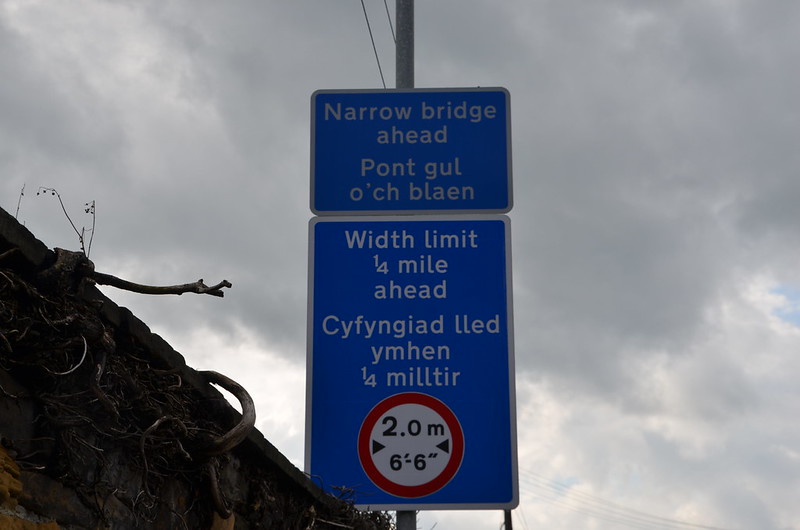
DSC_0897

A sign, in English and Welsh, about a bridge beyond where we parked. I wonder if there was a sign about the one that we tried? I didn't find one when I Google-walked around and over the bridge. I did get to see its narrow width and awkward angles. To my non-coach-drive-eye, our coach carrying 52 tour-goers was just too long. I'm so glad that the coach park was as close as it was to the aqueduct. Yea for us! And it didn't rain!

Thursday, November 27, 2014

ESHT 2014 - Out of Bristol and we're on the way to Wales! Wales, where it turned out that we had a whole lot for which to give thanks. More about that in a future post.


I opting for ESHT 2014 instead of England Scotland Heritage Tour 2014, y'all. Less typing.

DSC_0830

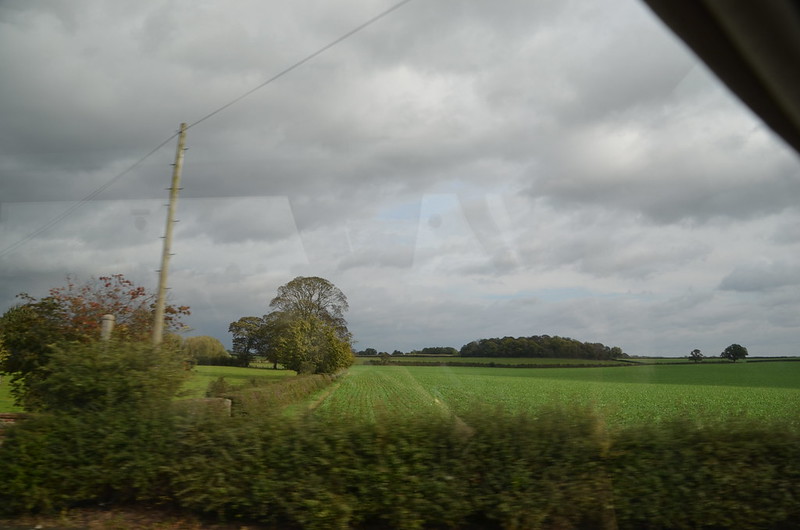
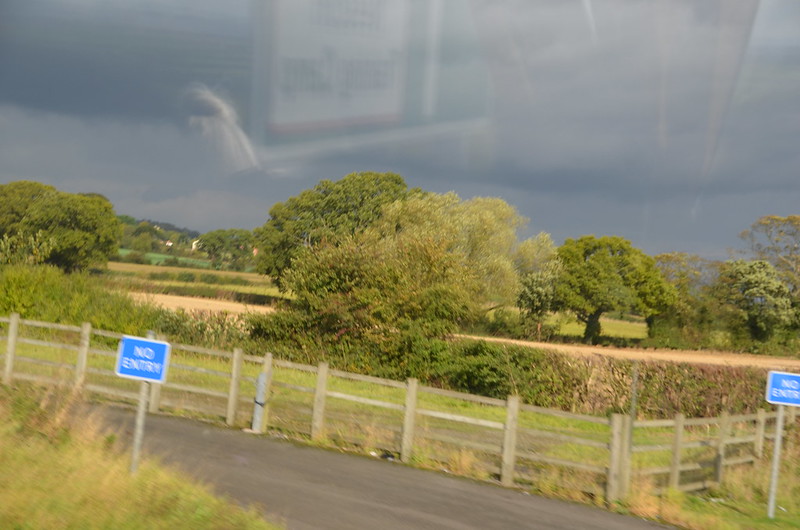
Lots of photos taken through the coach windows on this tour. Across the highway, a hedgerow.

DSC_0845

Another pretty sight seen from my window. Each person on the tour decided to take the optional North Wales Excursion. According to our itinerary: "Out of England and into Wales!" So, when we left Bristol and changed the tour route somewhat with the scheduled stop in Chester to take place after our excursion. That way we didn't have to backtrack! Sounded great to one and all.

DSC_0855

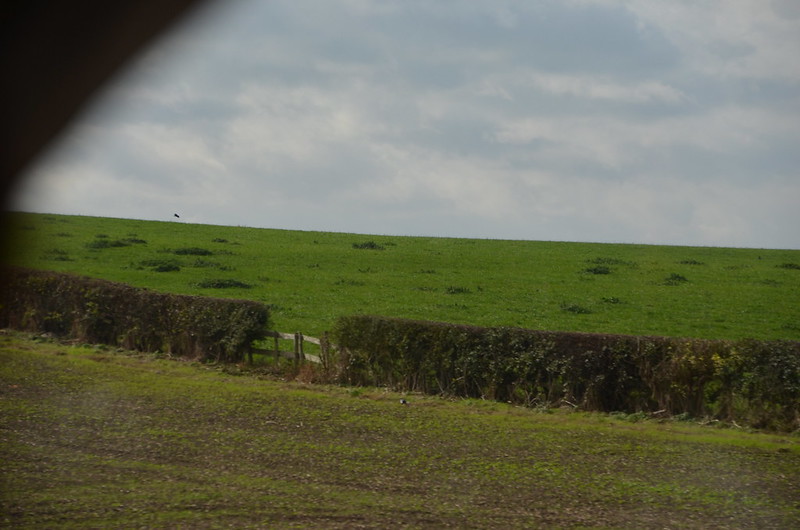
A gate in the hedgerow. I think that's a bird flying above the left part of the hedgerow.

DSC_0857

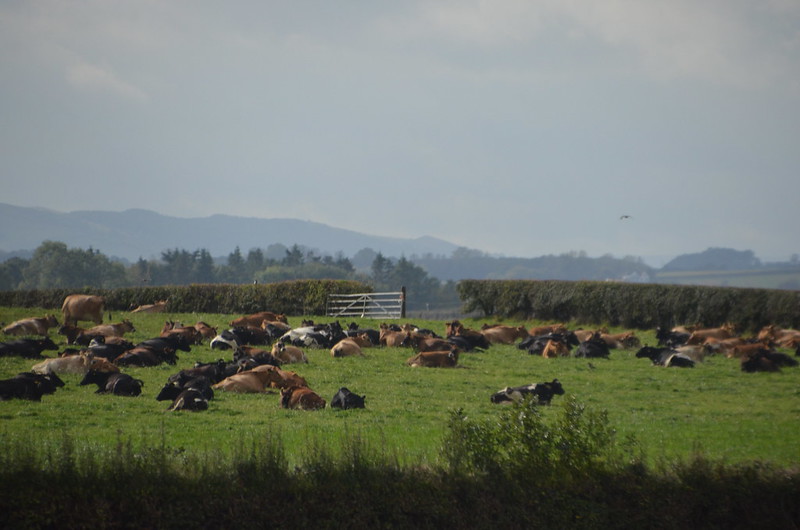
An even wider gate doesn't interest this herd of cows at the moment. There's a white house far in the distance beyond the right hedge, and a bird flies above that hedge, too.

DSC_0858

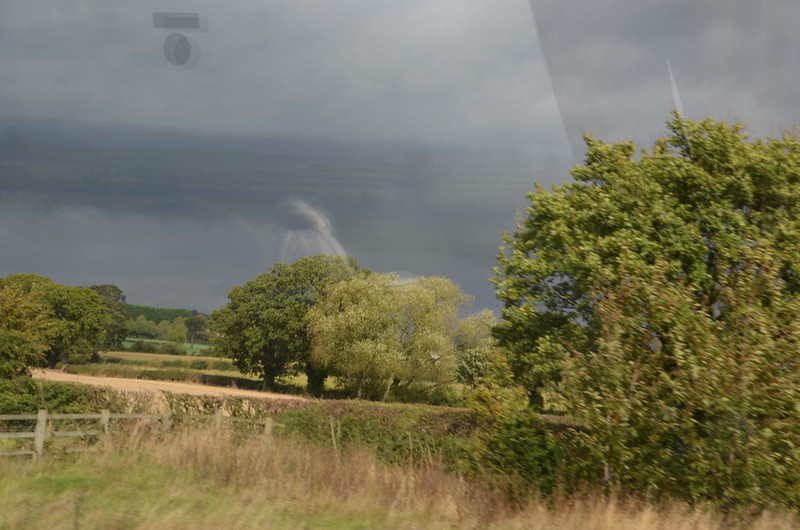
No, that's not some sort of exotic cloud formation above the trees. It's a reflection to the beautiful gray topknot of one of the ladies on the tour.

DSC_0859

Seeing these darkening skies made us wonder what weather we'd find at our first stop.

DSC_0860

Finally, some autumn foliage! Yes!

DSC_0861

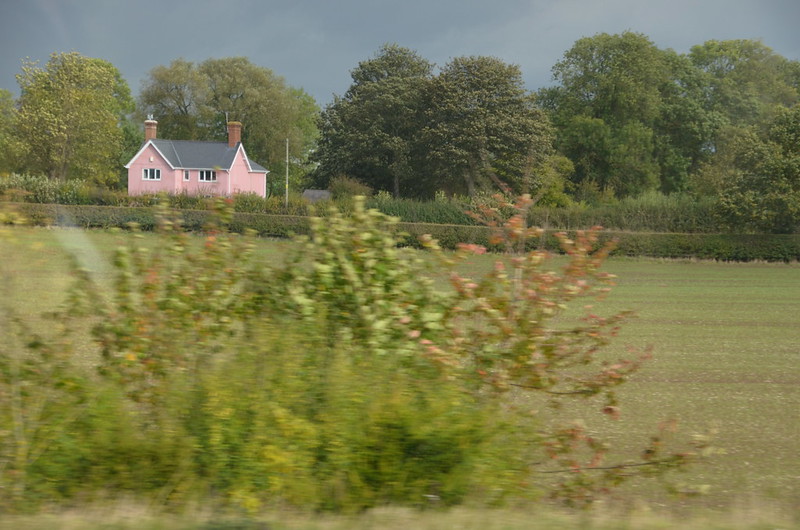
Must share the pink house with the two brick chimneys. I'll bet their garden (what those in the UK call their yard) looks great!

DSC_0862

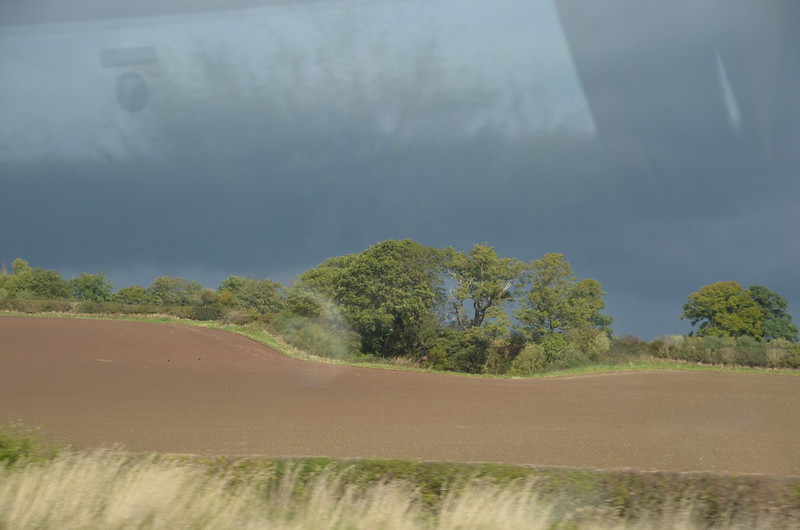
Excellent example of a field that follows the contour of the land--I wonder what gets planted there and when. It was already October 9 when I took this photo--ready for spring, maybe?

DSC_0867

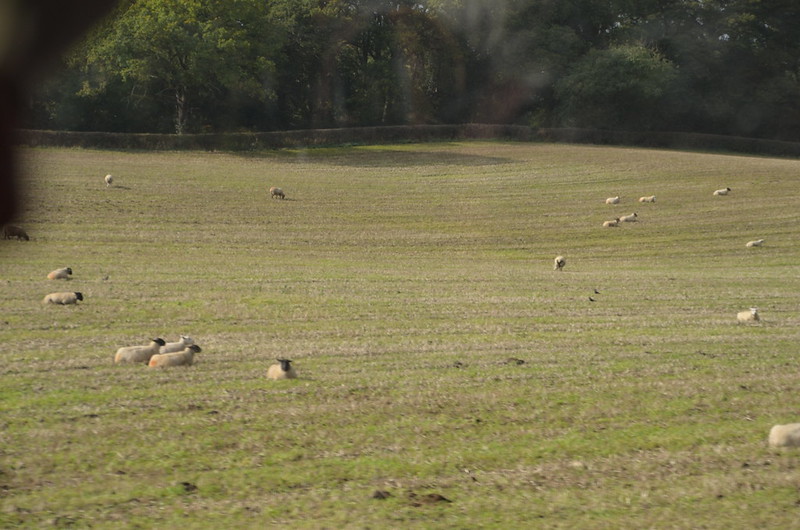
Sheep and birds share the rolling field and the sunshine.

DSC_0874

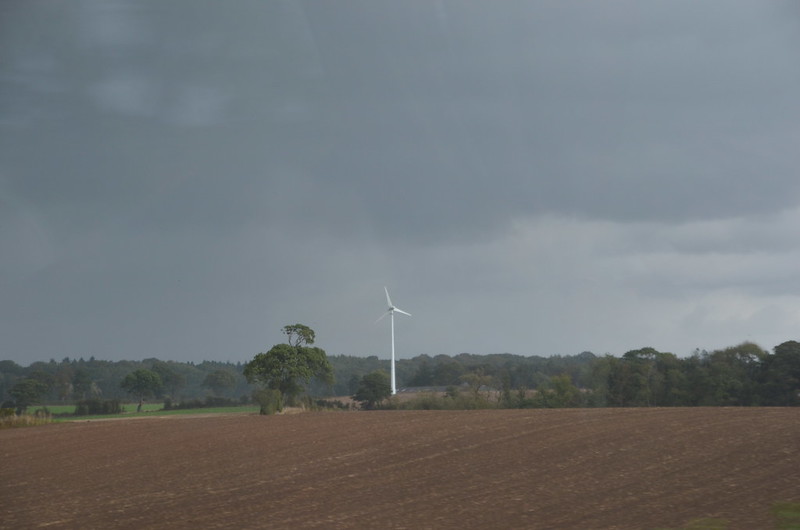
The second wind turbine that I photographed on the tour.

DSC_0883

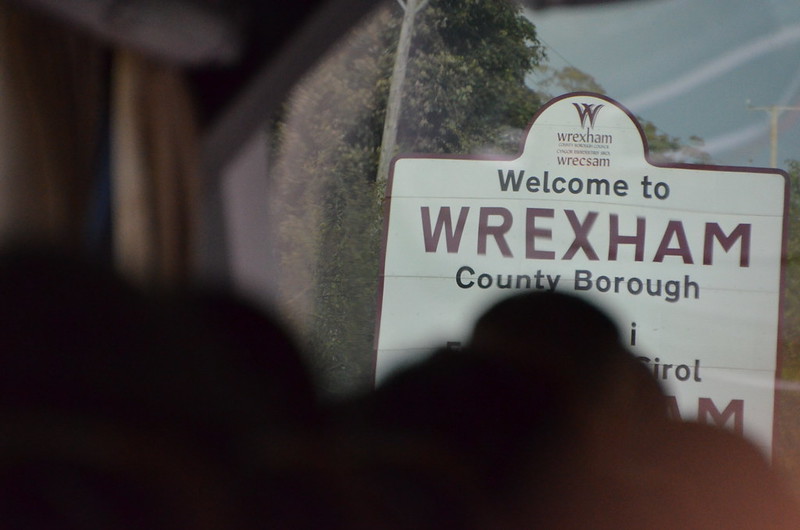
Wrexham means we're in Wales! Little did we know at that moment the foreshadowing of the phonetically and appropriately named town. More on that in a future post.

Tuesday, November 4, 2014

Our next stop, Bath, photos of The Royal Crescent, a dog having a fun in the sun, and the flowers nearby


Found on the World Wide Web - Bath, England. In 2011, its population was 88,859. The city became a spa with the Latin name Aquae Sulis ("the waters of Sulis") c. AD 60 when the Romans built baths and a temple in the valley of the River Avon, although oral tradition suggests that the hot springs were known before then. It became popular as a spa town during the Georgian era, leaving a heritage of Georgian architecture crafted from Bath Stone.

Bath became a World Heritage Site in 1987. The city's theatres, museums and other cultural and sporting venues have helped to make it a major centre for tourism with more than one million staying visitors and 3.8 million day visitors to the city each year. The city has two universities and there are large service sector, information and communication technology and creative industries.

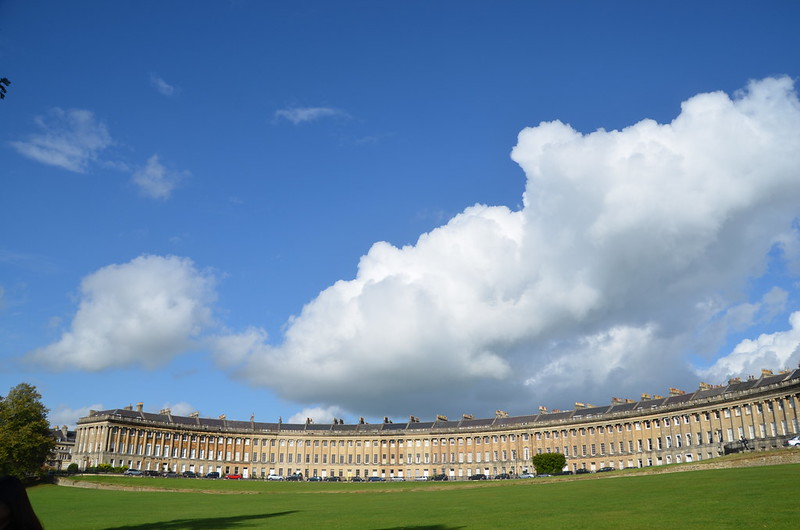
DSC_0406

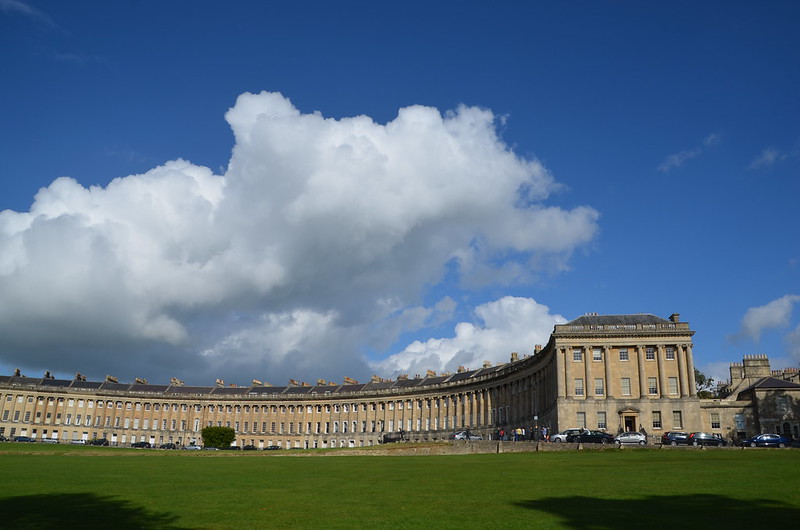
The Royal Crescent is a row of 30 terraced houses laid out in a sweeping crescent in the city of Bath, England. Designed by the architect John Wood the Younger and built between 1767 and 1774, it is among the greatest examples of Georgian architecture to be found in the United Kingdom and is a Grade I listed building. Although some changes have been made to the various interiors over the years, the Georgian stone façade remains much as it was when it was first built.

Many notable people have either lived or stayed in the Royal Crescent since it was first built over 230 years ago, and some are commemorated on special plaques attached to the relevant buildings.

DSC_0408

The Royal Crescent now includes a hotel and a Georgian house museum, while some of the houses have been converted into flats and offices. It is a popular location for the makers of films and television programmes, and a major tourist attraction in its own right.

The Royal Crescent is close to Victoria Park. The street that is known today as "The Royal Crescent" was originally named "The Crescent." It is claimed that the adjective "Royal" was added at the end of the 18th century after Prince Frederick, Duke of York and Albany had stayed there.

John Wood designed the great curved façade with Ionic columns on a rusticated ground floor. The 114 columns are 30 inches (76 cm) in diameter reaching 47 feet (14.3 m), each with an entablature 5 feet (1.5 m) deep. The central house (now the Royal Crescent Hotel) boasts two sets of coupled columns.

Each original purchaser bought a length of the façade, and then employed their own architect to build a house behind the façade to their own specifications; hence what can appear to be two houses is occasionally just one. This system of town planning is betrayed at the rear and can be seen from the road behind the Crescent: while the front is uniform and symmetrical, the rear is a mixture of differing roof heights, juxtapositions and fenestration. This architecture, described as "Queen Anne fronts and Mary-Anne backs," occurs repeatedly in Bath.

In front of the Royal Crescent is a ha-ha, a ditch on which the inner side is vertical and faced with stone, with the outer face sloped and turfed, making an effective but invisible partition between the lower and upper lawns. The ha-ha is designed so as not to interrupt the view from Royal Victoria Park, and to be invisible until seen from close by. It is not known whether it was contemporary with the building of the Royal Crescent, however it is known that when it was first created it was deeper than it is at present. You can see the ha-ha in the two photos I've used above.

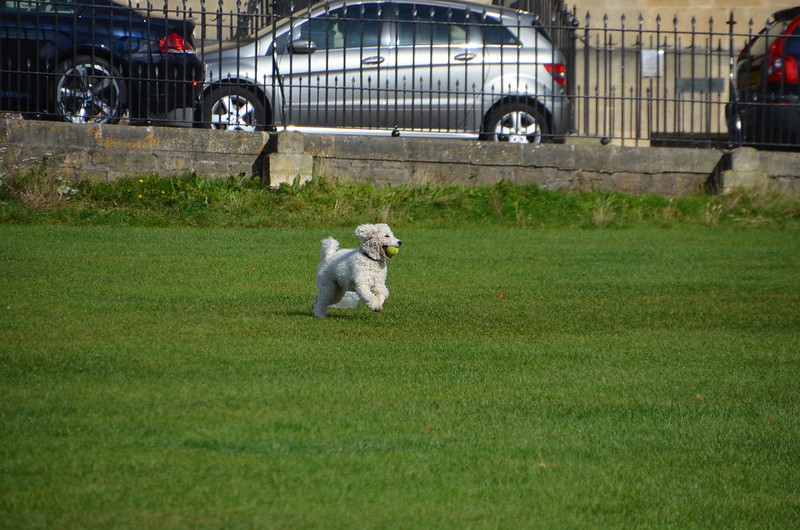
DSC_0418
The railings between the crescent and the lawn are included in the Heritage at Risk Register produced by English Heritage and were restored in 2011. This dog and its people had a great time, enjoying our wonderful sunshine!

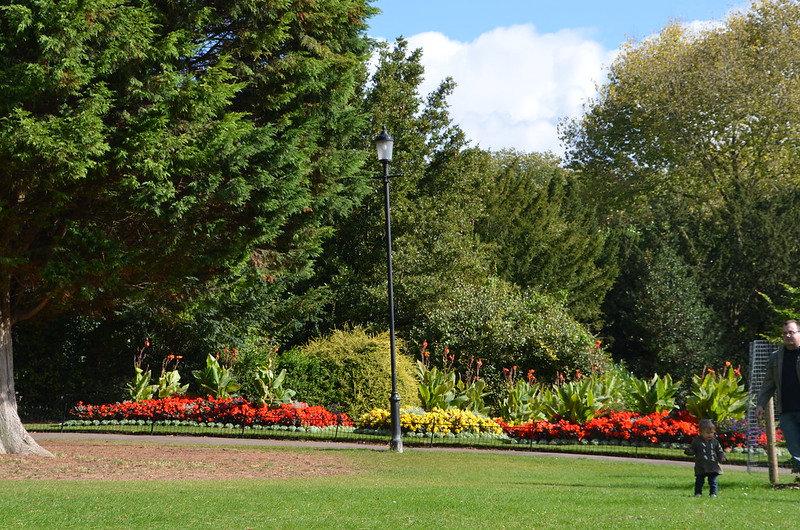
DSC_0431

Bright, colorful plants and flowers nearby--between The Royal Crescent and the street. The Royal Crescent is to my left as I took this photo, beyond some trees.

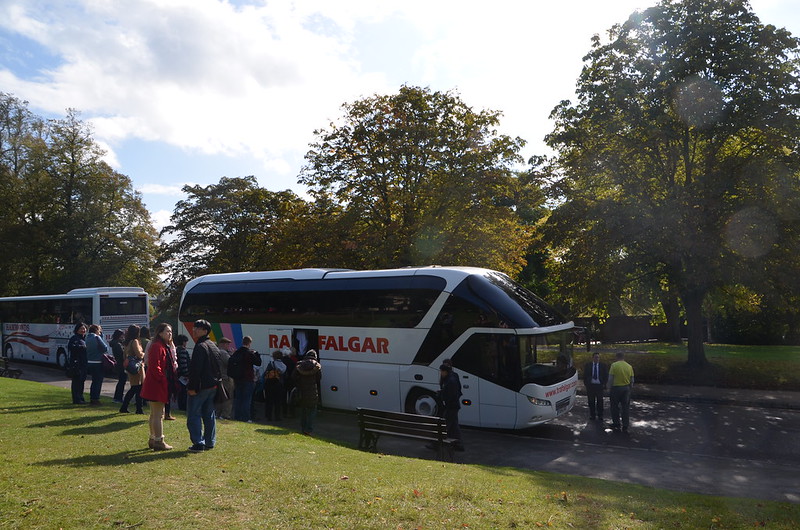
DSC_0427

The coach is parked on Royal Avenue--that's Tommy in the tie at the front of the coach. Victoria Park is across the street beyond the coach.


DSC_0426

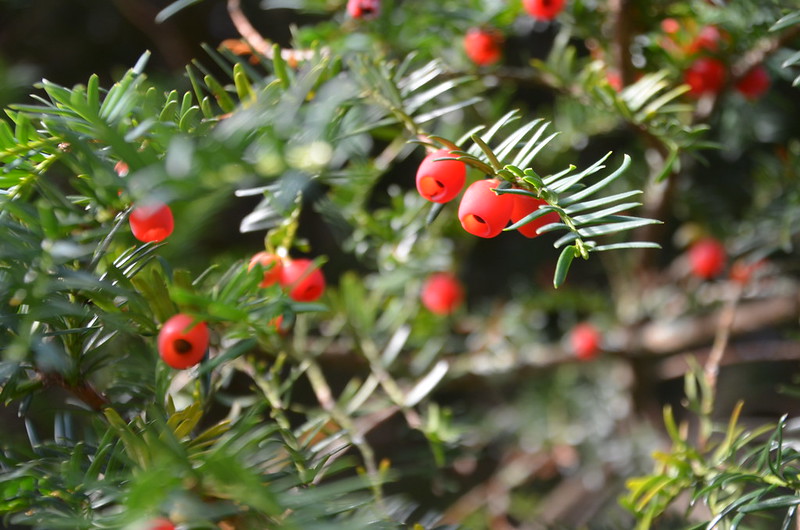
As I made my way back towards the coach, these red berries and green needles caught my eye--it's a yew tree, something I really, really wanted to see in the United Kingdom. Serendipity!